
Last updated September 24, 2026
Free written scope consultation - allowances, timeline, and change-order rules on paper before a single trade is scheduled





 Before
 After
After Before
 After
After Before
 After
AfterHow to Hire a Construction Contractor in Irvine: A Step-by-Step Guide
California’s Contractors State License Board shows that roughly 1 in 8 licensed contractors in Orange County has at least one unresolved consumer complaint on record, a number that drops to near zero among contractors who voluntarily provide their CSLB license history printout at first meeting. In Irvine, where the median home sale price has hovered above $1.2 million and HOA architectural committees review every exterior modification, a bad hire doesn’t just cost money; it can stall your project for months while you re-bid work another contractor started wrong. This guide - part of our Complete Guide to Construction in Irvine - teaches the paper-trail interview: what documents to request before any contractor quotes you, how to read what those documents actually say, and the specific Irvine conditions that separate a bid you can trust from one you shouldn’t.
Quick Answer
Hiring a construction contractor in Irvine means verifying CSLB license history (not just current status), demanding a certificate of insurance with your address listed as additional insured, and requiring written line-item scope before comparing any bids. The contractors who pass this document test are the same ones who finish within a few percent of their original price, because their paperwork discipline carries through to how they run the job.
Table of Contents
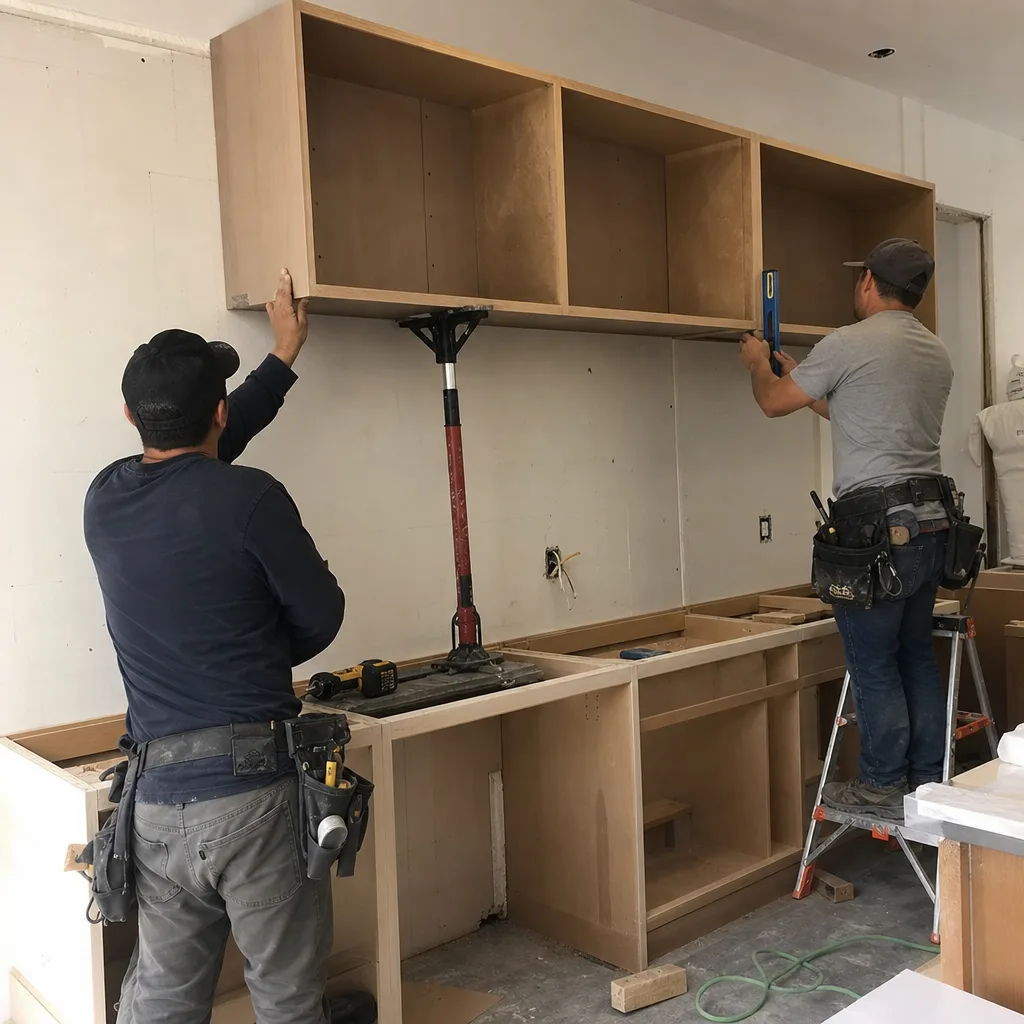
- How to Verify a Contractor’s CSLB License History (Not Just Status)
- What a Real Insurance Certificate Contains (And What’s Usually Missing)
- How to Compare Bids That Aren’t Apples-to-Apples
- The Change Order Clause Test
- Irvine HOA Red Flags: CC&R Compliance Before the First Nail
- The Paper-Trail Interview: Questions That Reveal Process Discipline
- Your Pre-Hire Documentation Checklist
- Common Mistakes to Avoid
 Before
 After
AfterHow to Verify a Contractor’s CSLB License History (Not Just Status)
Most homeowners stop at the CSLB website’s green checkmark. That’s a mistake. Active status only tells you the license hasn’t expired or been suspended today. It doesn’t tell you about the $15,000 bond claim filed two years ago, the administrative citation for advertising without a license number, or the voluntary suspension that preceded a bankruptcy.
Here’s how to pull the full history in under four minutes.
- Go to cslb.ca.gov and click “Check a License.” Enter the six- or seven-digit license number. Verify the business name matches exactly what’s on the contractor’s card and proposal. Some contractors operate under multiple DBA names with shared license numbers; note any discrepancies.
- Click the “License Detail” tab, not just the summary. Scroll to “Disciplinary Actions” and “Complaint History.” A single resolved complaint from 2019 is different from three complaints in eighteen months. Look for patterns: complaints about abandonment, structural work without permits, or failure to pay subcontractors (which can result in mechanics liens on your property).
- Request the CSLB “License History Printout” directly from the contractor. This document, which costs the contractor $8 and takes two minutes to generate, shows every classification held, every business name change, every disciplinary action with resolution status. Contractors who refuse this request are contractors who haven’t read their own history. In our experience reviewing competitor quotes during free second opinions at Rowan Construction Group Irvine, roughly 30% of active licenses have history elements the homeowner never saw.
- Verify the classification matches the work. A C-36 Plumbing contractor cannot legally perform structural framing for your kitchen remodel. A B-General Building contractor can, but only if the project involves two or more unrelated trades. For a kitchen remodeling project in Irvine, you want either a B license or an appropriate specialty combination with the B doing the coordinating.
In Irvine specifically, check whether the contractor’s license address matches a local physical location. Virtual office addresses in business parks are common; they aren’t disqualifying, but they mean you should verify where crews are actually dispatched from. A contractor whose license address is a UPS store in Costa Mesa but who claims “local Irvine crews” may be subcontracting to labor pools you can’t vet.
What a Real Insurance Certificate Contains (And What’s Usually Missing)
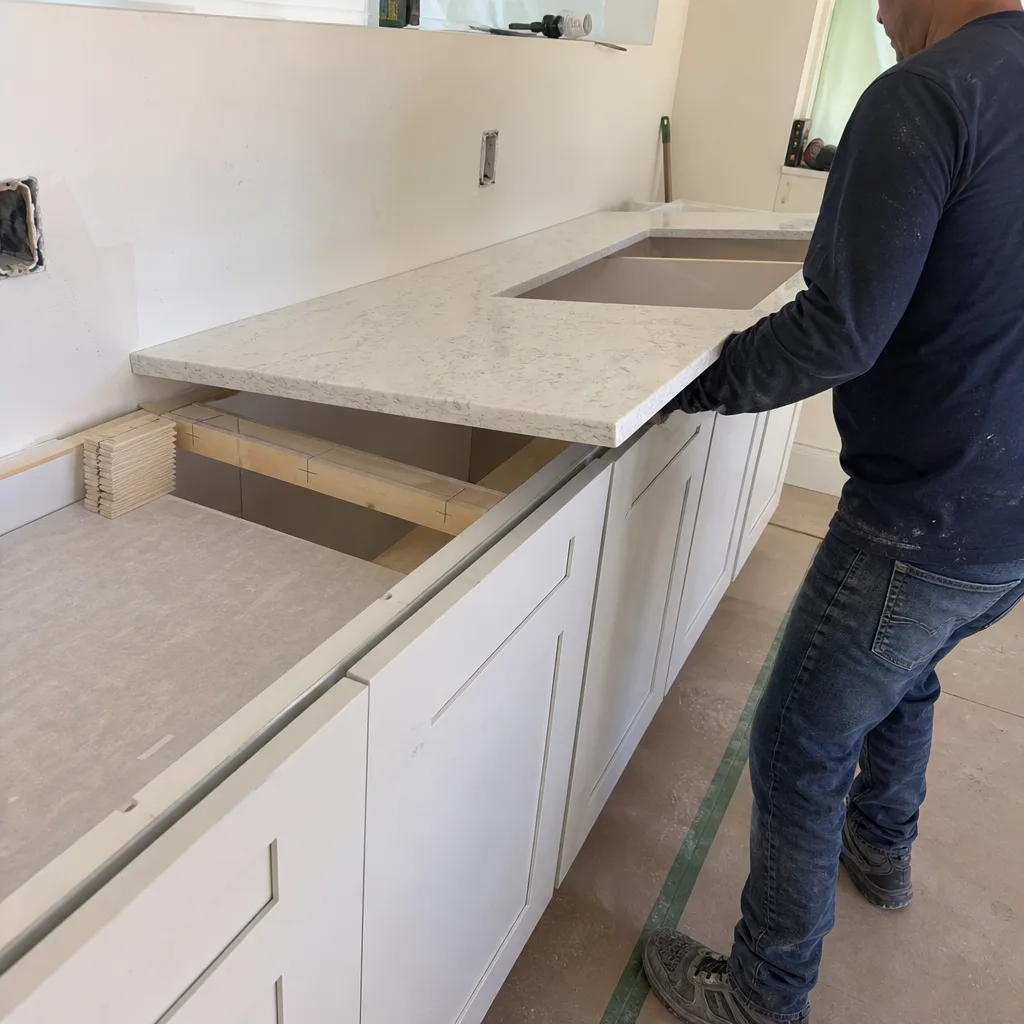
General liability insurance is not a yes/no question. The certificate of insurance (COI) is a one-page document that tells you whether you’re protected if a worker falls through your roof or a plumbing failure floods your neighbor’s condo in the Woodbridge Association. Most homeowners never see the actual COI; they see a promise in an email signature.
Request the COI directly from the contractor’s insurance broker, not from the contractor. This prevents alteration. The document should contain five specific elements:
- General liability limits of at least $1 million per occurrence / $2 million aggregate. For whole-home remodels or home additions in Irvine, ask for $2 million / $4 million. Higher-value Irvine properties in Shady Canyon or Turtle Rock carry lawsuit exposure that makes underinsurance a real risk.
- Workers’ compensation coverage with named carrier and policy dates. In California, contractors without employees can file an exemption. If you see this, understand that any subcontractor on your job must carry their own workers’ comp, and you should verify that separately.
- Your property address listed as “Additional Insured” with a specific endorsement date. This is the element most often missing. Without it, the contractor’s insurer can deny claims arising from your specific project by arguing the policy wasn’t extended to your location.
- The contractor’s legal business name matching the CSLB license exactly. Name mismatches between license, insurance, and proposal create coverage gaps that courts have ruled against homeowners on.
- Policy expiration date at least 30 days past your projected completion. Irvine’s permitting timeline, especially for ADUs or exterior work, can stretch projects longer than initial estimates.
We include our COI with every written proposal at Rowan Construction Group, with the homeowner’s address pre-listed as additional insured. The extra step takes our broker ten minutes and eliminates a coverage question that otherwise lingers unresolved through demolition.
How to Compare Bids That Aren’t Apples-to-Apples
The lowest bid in a competitive Irvine remodel often wins by omitting scope, not by efficiency. We’ve reviewed competitor quotes during our free second opinion consultations where the “winning” bid excluded permit fees, dumpster rental, final electrical inspection, or the dedicated circuit required by Irvine’s amended Title 24 energy code. The homeowner doesn’t discover this until change order number three.
Use this line-item normalization method before comparing any bids:
- Create a master scope list from the most detailed bid. If Bid A lists “remove and dispose existing cabinets” and Bid B says “demo,” assume Bid B’s demo is equivalent and note it. If Bid C has no demo line at all, flag it as missing scope, not savings.
- Add missing scope back into incomplete bids at market rate. For Irvine in 2024-2025, use these ranges: permit and inspection fees for kitchen remodels, $800-$1,400; dumpster rental for a full kitchen, $450-$650; dedicated 20A circuit, $350-$600; moisture barrier behind cement board in wet areas, $200-$400. These aren’t inflated numbers; they’re what the omitted work costs when it surfaces as a change order.
- Normalize material allowances. One bid’s “tile allowance” at $4/square foot and another’s at $12 aren’t comparable. Replace allowances with actual selections from the bathroom remodeling or kitchen showroom. We quote with specific brands - Cambria or Caesarstone for countertops, KraftMaid or Wellborn for cabinetry - so the price reflects a real product with a real SKU, not a placeholder that shifts risk to the homeowner.
- Calculate true comparison price. Bid A: $48,000 with all scope included. Bid B: $41,000 with $6,200 of normalized additions. Bid C: $39,000 with $9,400 of normalized additions. The “cheapest” bid is now the most expensive, and you haven’t signed anything yet.
This method fails if you don’t have line-item detail. A single-number proposal - “Complete kitchen remodel: $42,000” - cannot be normalized because you cannot see what’s included. Under Clause 1 of the Haven Standard, we deliver written line-item scope with every quote, every trade, because a single-number bid is a contract you cannot enforce.
The Change Order Clause Test
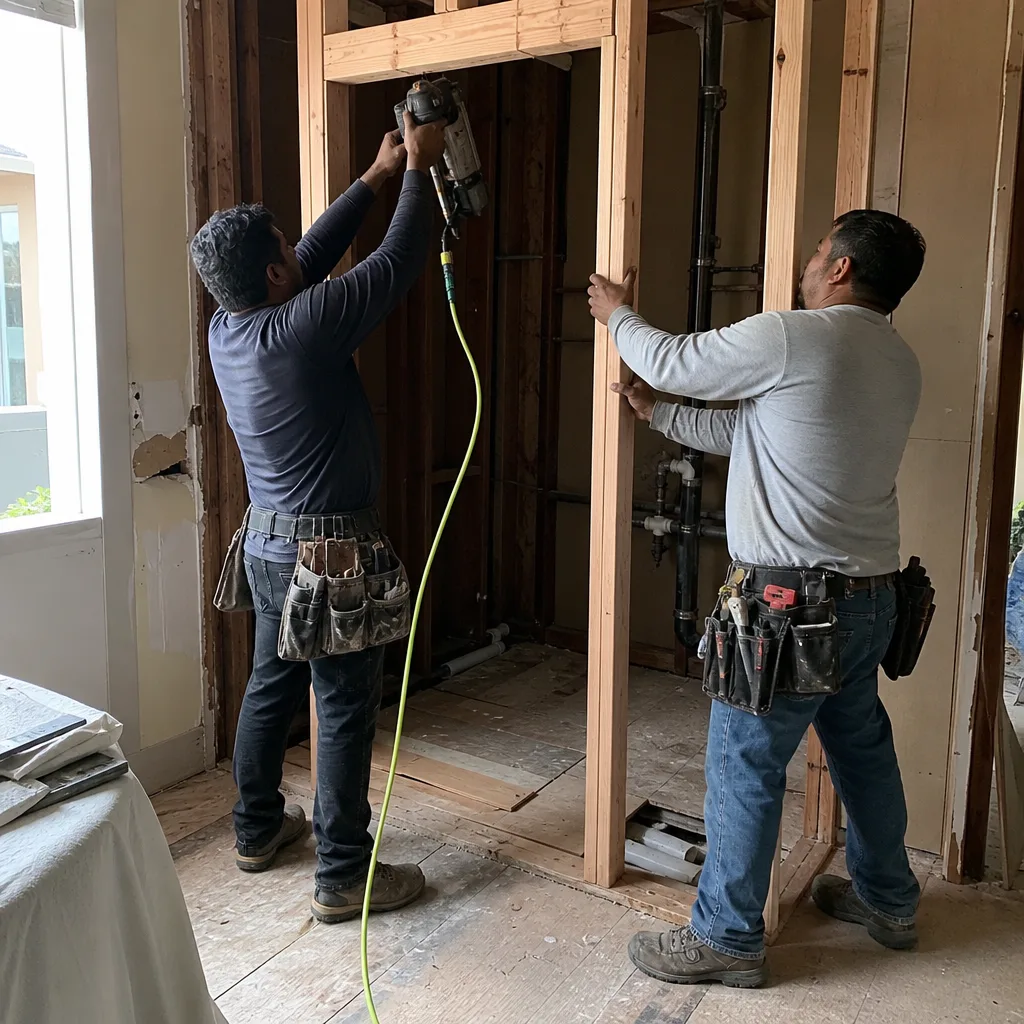
The change order is where remodel budgets die. Industry data from the Joint Center for Housing Studies shows that major remodels average 20-30% cost overruns, with change orders as the primary driver. In our 4,000-plus projects since 2007, we’ve kept overruns to a few percent of the agreed price. The mechanism is administrative, not magical: no work proceeds on a change until the change order is signed.
Here’s the exact contract language to look for, and what to run from:
Language that protects you:
- “No additional work shall be performed, and no additional charges shall accrue, without a written change order signed by both parties before the changed work begins.”
- “Contractor shall not proceed with any deviation from the written scope without prior written authorization.”
- “Oral agreements, field instructions, or verbal modifications shall not be binding.”
Language that exposes you:
- “Contractor may proceed with changes necessary for code compliance without prior written approval.” (Vague; what counts as “necessary”?)
- “Owner shall pay for all additional work performed, whether or not a change order was executed.” (This makes unsigned changes enforceable debt.)
- “Time and materials rates apply to all changes.” (No price ceiling, no written scope.)
The test is simple: show the contract to someone uninvolved, ask them to find the change order clause, and ask what it says. If they can’t find it in thirty seconds, or if it requires a law degree to parse, the contract is designed for dispute, not clarity.
At Rowan Construction Group, our change order form is the same document for every trade, with three fields: the changed scope, the price change, and signatures. No signature, no change. The discipline Haven acquired us for, and the reason our projects finish within a few percent of the number the customer agreed to.
Irvine HOA Red Flags: CC&R Compliance Before the First Nail
Irvine’s master-planned communities operate under some of the most detailed architectural control frameworks in California. The Irvine Company, Woodbridge Community Association, Northwood Pointe, and Turtle Rock Community Association each maintain design guidelines that govern paint colors, roofing materials, fence heights, driveway surfaces, and even the species of replacement trees. A contractor who quotes your project without requesting these documents is quoting work they haven’t fully scoped.
Specific red flags by project type:
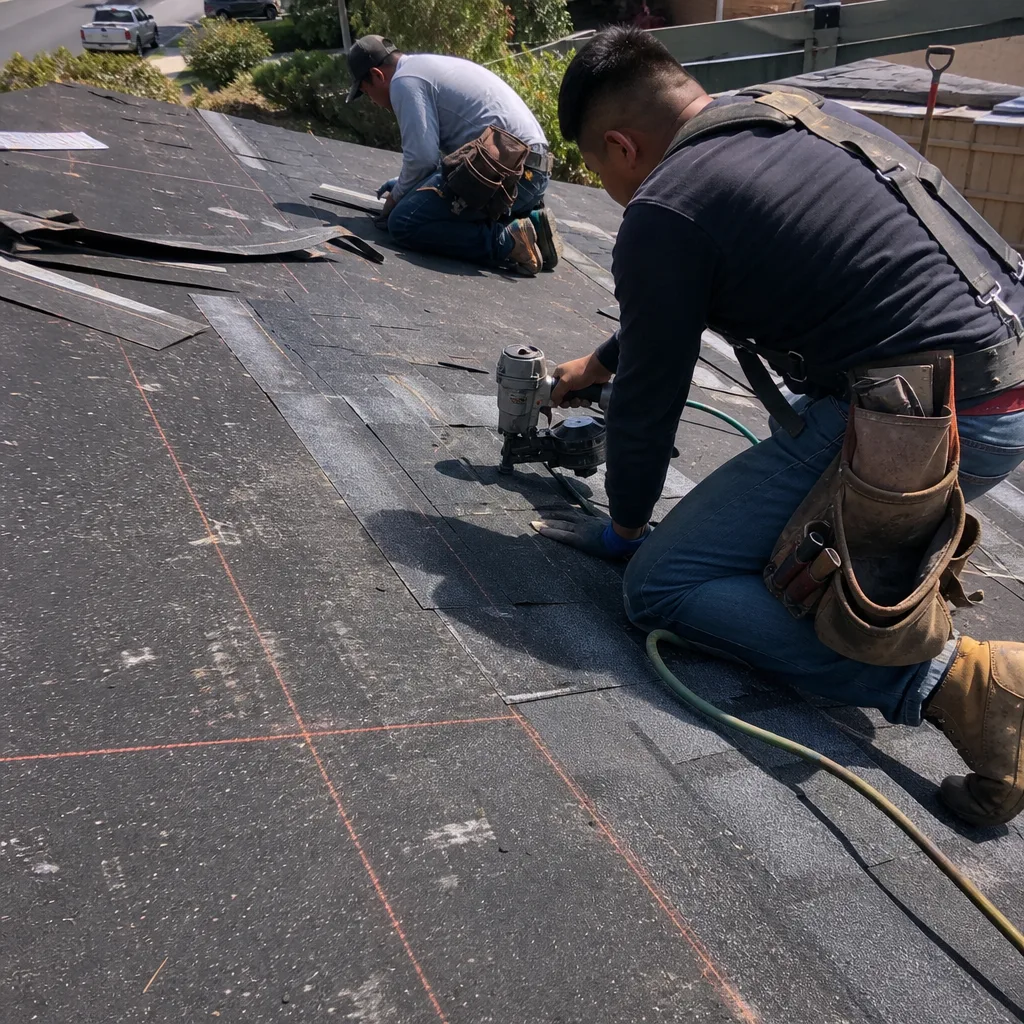
- Roofing replacement: Many Irvine HOAs require specific shingle profiles or colors from approved manufacturer lists. GAF Timberline HDZ in Barkwood may be approved; Charcoal may not. A contractor quoting “30-year architectural shingles” without naming the product and checking the HOA palette is planning a color correction at your expense. For roofing projects in Irvine, we pull the CC&R design guidelines before quoting and include the approved product list as an appendix to the written scope.
- Driveway and hardscape: Woodbridge and University Park restrict paver colors to earth tones; some sections prohibit poured concrete entirely in favor of interlocking pavers from approved manufacturers like Belgard, Techo-Bloc, or Cambridge Pavers. A contractor quoting “new driveway” without specifying paver brand and color is quoting a project that may fail architectural review.
- Fencing: Height restrictions vary by community frontage; some require masonry base with wood or composite above. A 6-foot quote in a 4-foot zone is a guaranteed redo.
- Exterior paint and siding: Many Irvine HOAs require submission of color samples to an architectural review committee with 30-45 day turnaround. A contractor who doesn’t build this timeline into the project schedule is either unaware of it or planning to start illegally and seek forgiveness.
The specific test: on first meeting, does the contractor ask for your HOA name and request the CC&R packet? If not, they haven’t built in Irvine before, or they have and they’re hoping the compliance cost lands as your change order. We ask for CC&Rs on every exterior project in Irvine, and we include the architectural submission in our project timeline at no additional charge.
The Paper-Trail Interview: Questions That Reveal Process Discipline
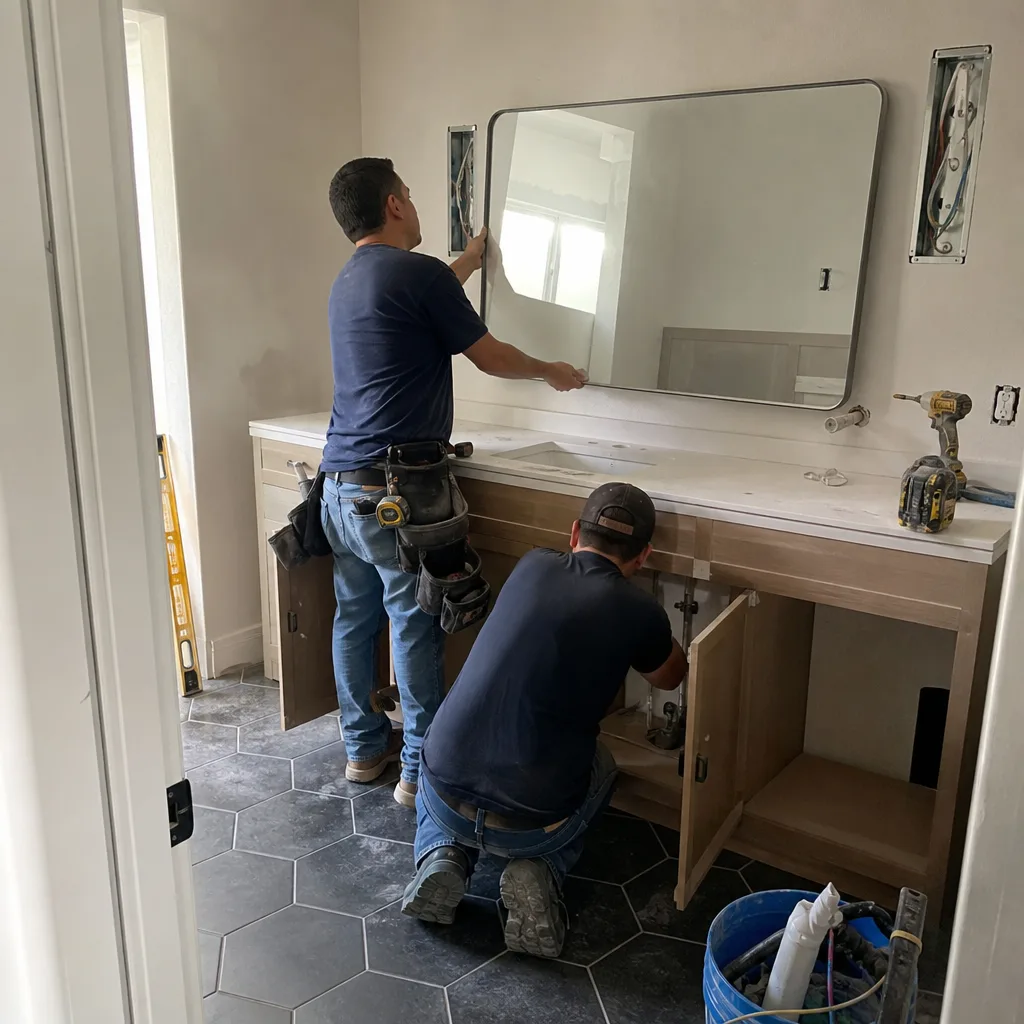
Most hiring guides suggest asking “How long have you been in business?” and “Can you provide references?” These questions produce rehearsed answers. The paper-trail interview asks for documents, not opinions. The answers are verifiable and the process of producing them reveals whether the contractor has systems or just stories.
Question 1: “Will you provide your CSLB license history printout at our first meeting?”
A contractor with clean history says yes immediately. A contractor with something to hide deflects: “You can look it up online,” or “I’ve never been asked for that.” The printout costs $8. There is no legitimate reason to refuse.
Question 2: “Will your insurance certificate list my address as additional insured, and can your broker email it directly?”
The broker-direct request prevents document alteration. A contractor who balks at this either doesn’t understand their own coverage or knows it won’t meet the requirement.
Question 3: “Can you show me a completed change order from a recent job?”
This is the question that separates process discipline from good intentions. A contractor who produces a one-page form with scope, price, and signatures has a system. A contractor who describes their change order process without producing the document is describing aspirations. Ask to see the actual form.
Question 4: “What does your written quote include beyond labor and materials?”
The answer should include: permit fees, inspection scheduling, dumpster rental, jobsite protection (flooring, dust containment), final cleaning, and warranty documentation. In Irvine specifically, it should include HOA architectural submission support if the project touches the exterior. A quote that omits these is a quote that will grow.
Question 5: “What documentation do I receive when the crew leaves?”
The answer should be specific: photo record of work in progress, final inspection sign-off, lien releases from all subcontractors and material suppliers, and a written warranty. At Rowan Construction Group, our documented photo record is standard on every visit, not an upgrade. The customer leaves with evidence of what was found and what was done, stored in their project portal.
Question 6: “What happens if I bring you a competitor’s written quote?”
We offer a free second opinion on any written estimate, reviewed line by line at no charge. Contractors who refuse to review competitors’ quotes are contractors who don’t want their own pricing scrutinized. The review isn’t about undercutting; it’s about identifying omitted scope, mismatched specifications, and coverage gaps before you sign.
Your Pre-Hire Documentation Checklist
Before signing any contract in Irvine, assemble this file. Missing documents are missing protection.
- CSLB license history printout (not just online screenshot)
- Certificate of insurance with your address as additional insured
- Written line-item scope of work with material brands or equivalent specifications
- Written fixed price with payment schedule tied to verifiable milestones (not calendar dates)
- Change order form with signature requirement, shown as a blank template
- Copy of contractor’s bond (separate from license; $25,000 minimum in California)
- HOA CC&R design guidelines with contractor’s acknowledgment of applicable sections
- Permit application with Irvine Community Development Department, or contractor’s written commitment to pull permits before work begins
- Lien release template and schedule (partial releases with progress payments, final release at completion)
- Written warranty document with duration, coverage, and claim procedure
Contractors who operate under documented systems produce these documents without friction. Contractors who don’t have them will offer explanations: “We’ve never needed that,” or “Our handshake is our warranty.” In a market where the median remodel exceeds $75,000, documentation isn’t suspicion; it’s due diligence.
Common Mistakes to Avoid
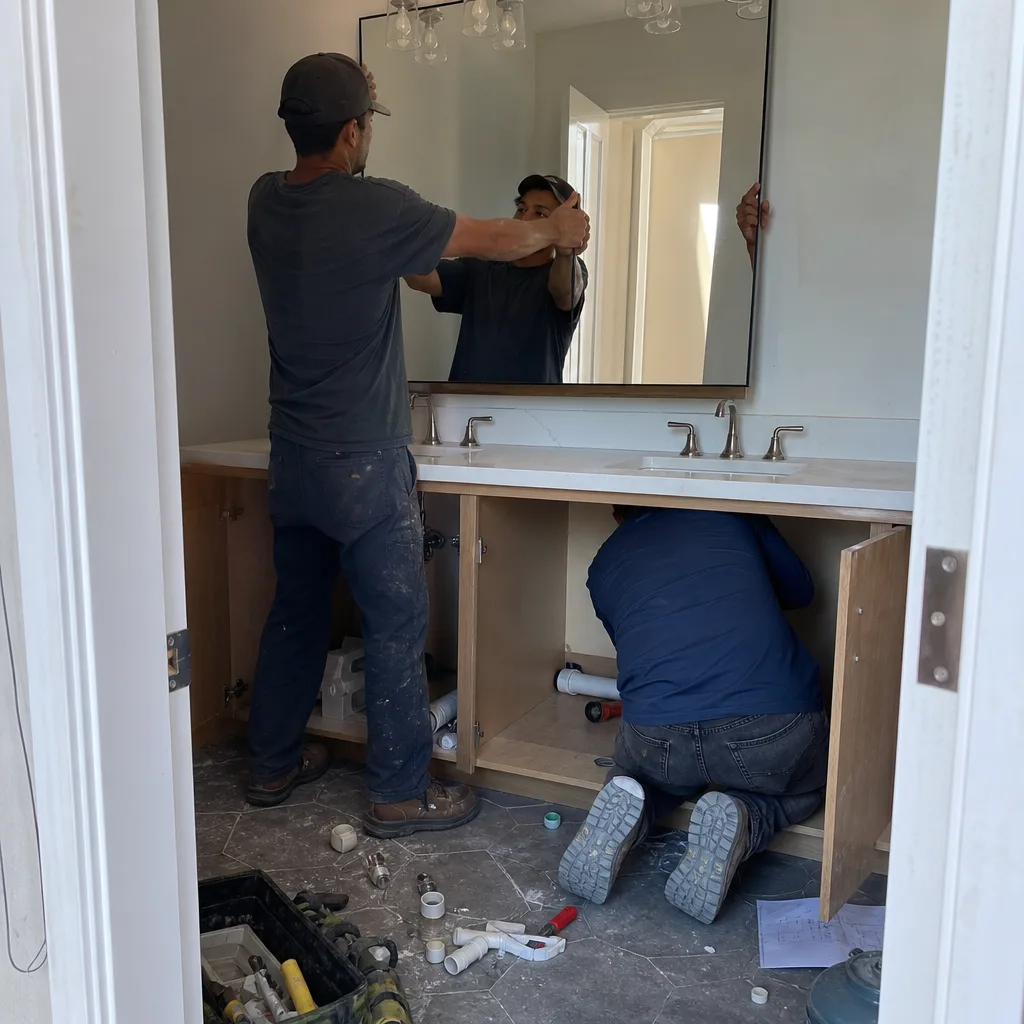
- Verifying license status without pulling history. The CSLB green checkmark is a starting point, not a vetting conclusion. The history printout shows patterns of complaints, business name changes, and disciplinary resolutions that active status conceals.
- Accepting a proposal without material specifications. “Granite countertops” and “Cambria quartz in Brittanicca Warm with eased edge and 2cm thickness” are not the same product at the same price. Unspecified materials become downgrades or change orders.
- Comparing bids without normalizing for missing scope. The lowest bid often wins by omitting permits, inspections, or required code upgrades. Add these back at market rate before comparing.
- Ignoring Irvine’s amended Title 24 requirements. California’s energy code has local amendments that affect window replacement, insulation, and HVAC sizing. A contractor who doesn’t mention Title 24 compliance is planning to discover it at inspection failure.
- Signing a contract with open-ended change language. “Time and materials for all changes” or “contractor may proceed with necessary code upgrades” are blank checks. Require written, signed scope for every change.
- Starting work before HOA approval. In Irvine’s master-planned communities, starting without architectural committee approval can trigger stop-work orders and fines. Build the review timeline into your project schedule from day one.
- Paying the final balance before receiving lien releases. Unpaid subcontractors and suppliers can file mechanics liens against your property even if you paid the general contractor in full. Final payment follows final lien release, not the other way around.
When to Call a Professional
Some project conditions make self-management or handyman hiring actively risky. Call a licensed general contractor when your project involves structural modification, load-bearing wall removal, electrical service upgrades, gas line relocation, or work requiring Irvine building permits. These aren’t just complexity issues; they’re liability issues. An unpermitted kitchen removal of a load-bearing wall can compromise your home’s structural integrity and void your homeowner’s insurance. A gas line moved without proper inspection creates fire and explosion risk that no savings justify.
Rowan Construction Group Irvine offers free estimates in Irvine - call (657) 227-2502. We deliver written line-item scope and fixed pricing before any work starts, every trade from kitchen remodeling through home additions and ADUs, backed by the 365-Day Done Right Promise and the documented discipline of The Haven Standard.
Frequently Asked Questions
Whole-home remodels in Irvine typically range from $150 to $400 per square foot depending on finish level and structural complexity; kitchen remodels generally fall between $35,000 and $85,000; bathroom remodels between $18,000 and $45,000; and detached ADUs between $250,000 and $450,000 including permits and utility connections. These ranges reflect Irvine’s labor market, Title 24 energy code compliance costs, and the permitting timeline at the Irvine Community Development Department. Call (657) 227-2502 for an exact quote on your specific project - estimates are free and include written line-item scope.
Visit cslb.ca.gov, click “Check a License,” and enter the six- or seven-digit license number. Review the License Detail tab for disciplinary actions and complaint history, then request the official license history printout from the contractor for the complete record. The online check takes two minutes; the printout verification separates contractors with clean histories from those with concealed problems.
General liability of at least $1 million per occurrence, workers’ compensation or a valid exemption with verified subcontractor coverage, and your property address listed as additional insured on the certificate. For higher-value Irvine properties or whole-home projects, request $2 million per occurrence. The certificate should come directly from the insurance broker, not the contractor, and show policy dates extending past your projected completion.
Bids vary because scope varies, even when the project description sounds identical. One bid includes permits, inspections, dumpster rental, and code-required upgrades; another omits one or more of these. Normalize bids by adding missing scope back at market rate before comparing. A written line-item proposal makes this possible; a single-number bid does not.
Yes, for any exterior modification in Irvine’s master-planned communities. Woodbridge, Turtle Rock, Northwood Pointe, University Park, and most Irvine Company villages require architectural committee review with specific design guidelines for roofing, paint, fencing, hardscape, and landscaping. Interior-only remodels typically don’t require HOA approval but may require notification. A contractor who quotes exterior work without requesting your CC&R packet hasn’t fully scoped the project.
A California construction contract must include: the contractor’s license number, start and completion dates, payment schedule tied to milestones, description of work and materials with brands and model numbers, notice of your three-day right to cancel, and mechanics lien warning language. Beyond the minimum, require a written change order clause with mutual signature requirement, and a written warranty with specific coverage and duration. Under Clause 1 of the Haven Standard, we add line-item scope, documented photo record commitment, and the 365-Day Done Right Promise to every contract.
The Bottom Line
Hiring a construction contractor in Irvine is a document exercise disguised as a price comparison. The contractors who finish within their original quote are the ones who document scope before work starts, control changes with signed authorizations, and build HOA compliance into the timeline rather than recovering from its absence. Start with the CSLB history printout, verify insurance with your address listed, normalize bids for missing scope, and read the change order clause aloud before signing. The paper trail you assemble before hiring is the same discipline that protects your budget after the crew arrives. For more guides & resources, visit our blog.
Written by Grant Rowan, Owner at Rowan Construction Group Irvine, serving Irvine since 2007.