
Last updated September 24, 2026
Free written scope consultation - allowances, timeline, and change-order rules on paper before a single trade is scheduled

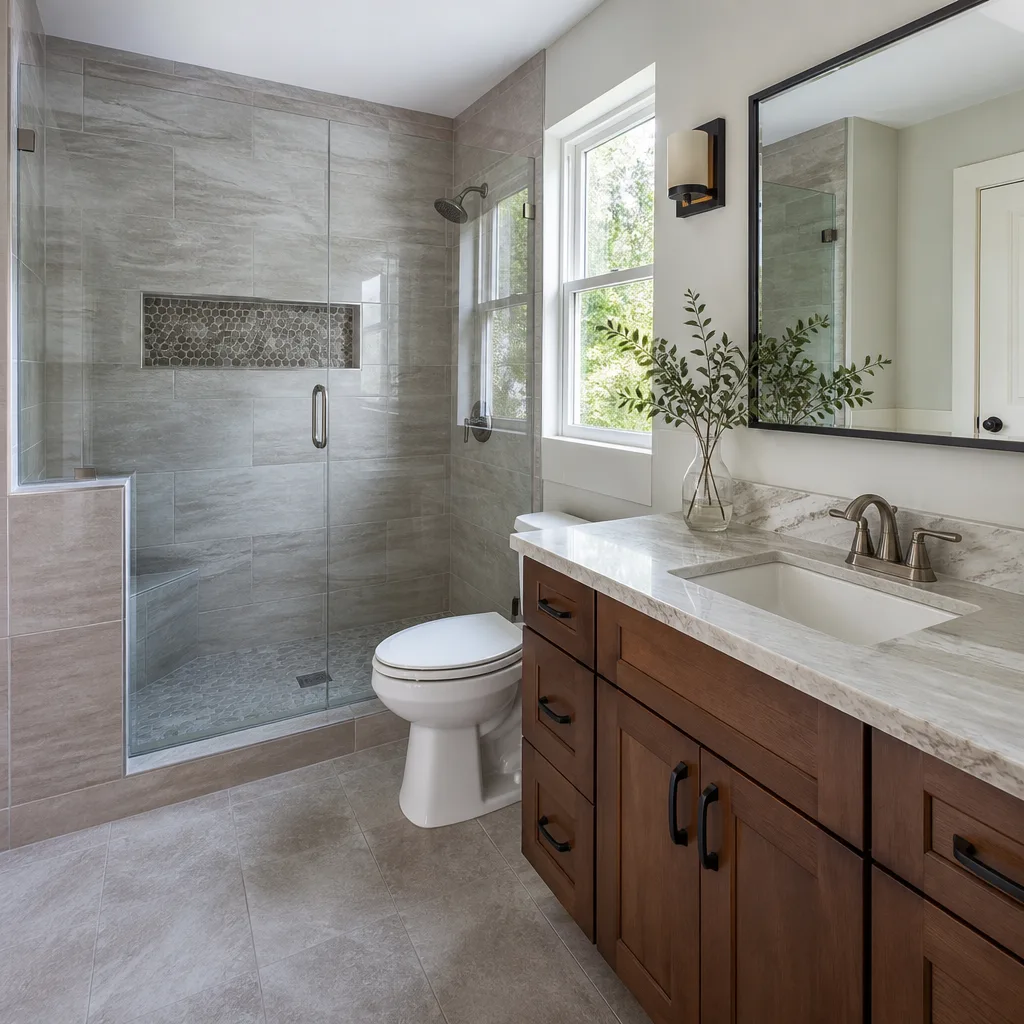




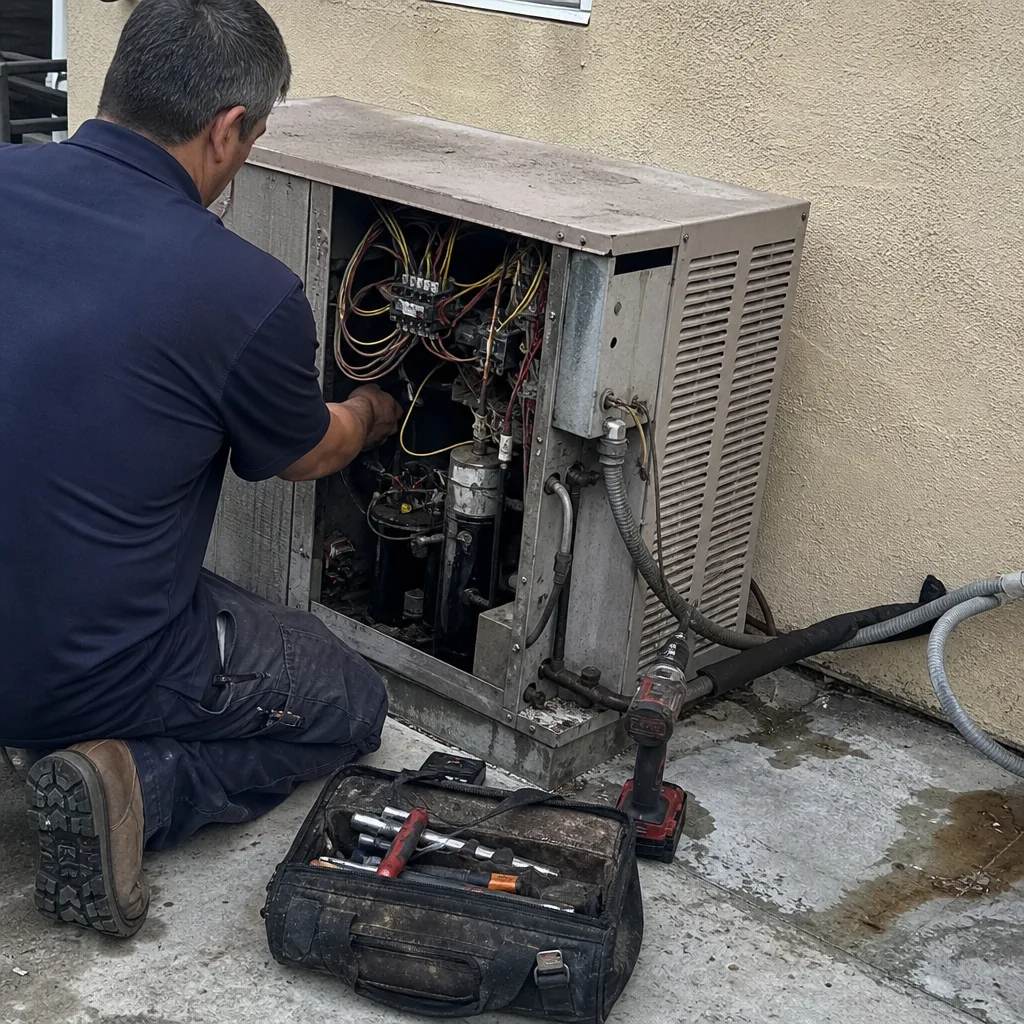 Before
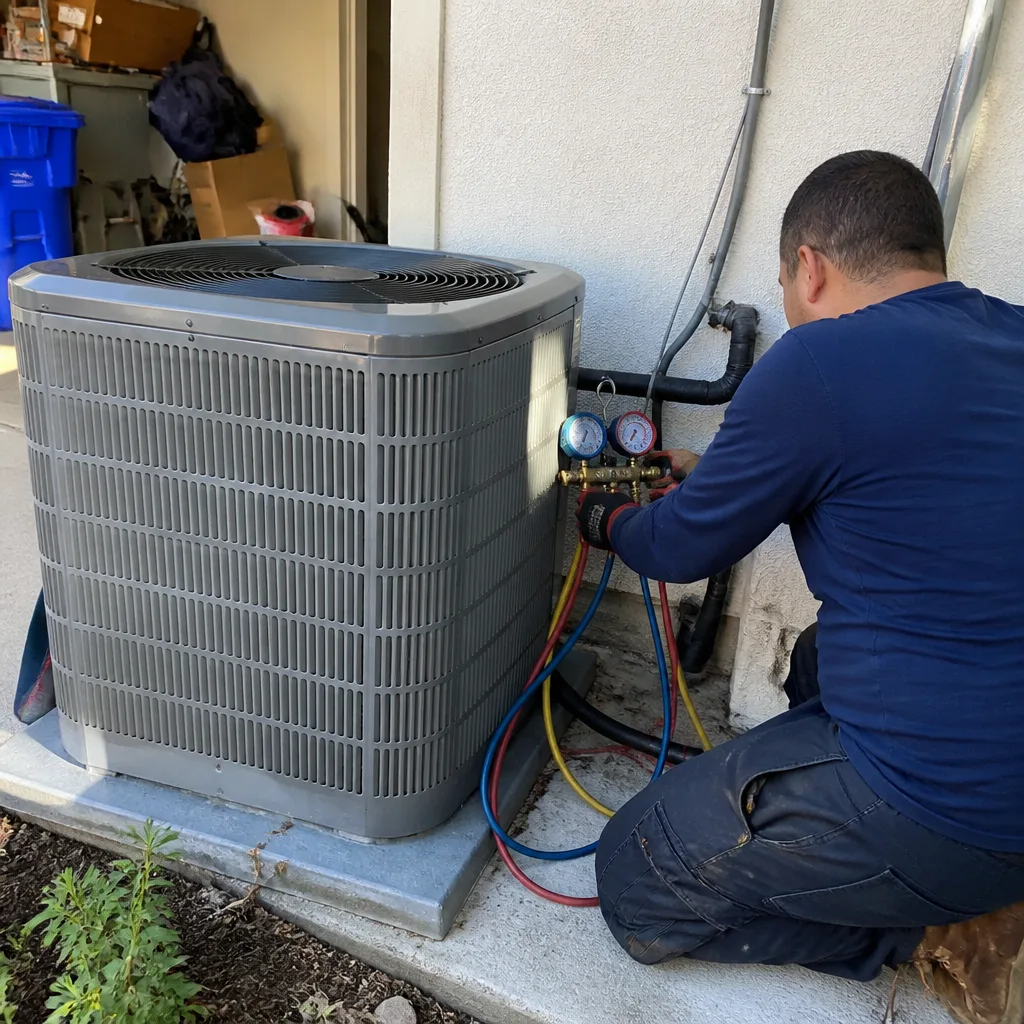 After
After Before
 After
After Before
 After
AfterKitchen Remodeling Maintenance Checklist for Irvine Homeowners
Irvine’s municipal water supply tests at 300-400 mg/L total dissolved solids, hard enough to calcify undermount sink clips, corrode garbage disposal flanges, and void certain quartz countertop warranties within 24 months if sealant schedules aren’t followed. The coastal-adjacent humidity here, typically 60-70% even inland, accelerates every weak joint and under-sealed surface that looked perfect at punch-list sign-off. This guide gives you a dated, sign-off-ready maintenance log that doubles as warranty documentation, because the first 18 months of ownership reveal whether your contractor built to last or built to photograph. For broader project planning, see our Complete Guide to Construction in Irvine.
Quick Answer
A proper kitchen remodel maintenance program in Irvine requires inspections at 30, 90, 180, and 365 days, with hard-water-specific descaling at TDS levels above 300 mg/L, grout and caulk checks every six months, and documented maintenance logs that satisfy manufacturer warranty requirements for brands like Kohler, Brizo, and KraftMaid. Skip any interval and you risk voiding coverage on the fixtures and finishes you just paid to install.
Table of Contents
- The 30/90/180/365-Day Inspection Schedule
- Hard-Water Maintenance for Irvine’s 300-400 mg/L TDS Supply
- How to Read Your Remodel’s Permit Final-Inspection Card
- Grout, Caulk, and Sealant: Where Each Belongs and How Each Fails
- Documenting Maintenance for Manufacturer Warranty Compliance
- Material-Specific Care: Cabinets, Countertops, and Fixtures
- Common Mistakes to Avoid
- When to Call a Professional
- Frequently Asked Questions
 Before
 After
AfterThe 30/90/180/365-Day Inspection Schedule
Every trade that touched your kitchen, plumber, electrician, cabinet installer, tile setter, each left work that settles, cures, and reveals itself under load. We have seen too many Irvine homeowners discover a problem at month 14, past the contractor’s workmanship window and past the manufacturer’s coverage period. This schedule prevents that.
30 Days: The Settlement Check
At 30 days, your cabinets have borne their first full load cycle. Your grout has cured. Your plumbing connections have experienced thermal expansion from hot and cold water cycles. Check these items:
- Cabinet doors and drawers: Open and close every door and drawer ten times. Listen for rubbing, dragging, or misalignment. The wood has acclimated to your home’s humidity; the installer should have left adjustment instructions for the Blum or Grass hinge plates. If the soft-close feature no longer engages fully, the hinge cup has shifted.
- Tile and stone countertops: Run a dry hand across every grout joint and caulk line. Any grittiness indicates incomplete cure or premature water exposure. Check undermount sink edges for gaps where the silicone bead meets the stone; this is where Irvine’s hard water first penetrates.
- Plumbing fixtures: Remove and inspect aerators on all faucets. At 300+ mg/L TDS, you will likely find white calcification already forming. Soak in white vinegar for 30 minutes, then document the date and TDS reading in your log.
- Electrical: Test every GFCI outlet with the test button. Under California’s Title 24, kitchen outlets require GFCI protection; the permit inspector verified this, but the device itself can fail early.
90 Days: The Seasonal Stress Test
Irvine’s September-October heat waves stress materials differently than the mild spring installation period. See our Seasonal Construction Care for Irvine: Year-Round Homeowner’s Guide for climate-specific timing. At 90 days:
- Check cabinet face frames for hairline cracks at joint locations, especially on painted MDF or thermofoil doors. The thermal cycling between air-conditioned interiors and wall cavities that hit 95°F+ causes differential expansion.
- Inspect caulk lines at backsplash-to-countertop and sink-to-countertop joints. Any separation wider than 1/16 inch indicates the wrong caulk was used or the joint was not properly primed.
- Run water at full flow through the garbage disposal for 60 seconds, then check the flange underside with a flashlight. Hard water calcification at the stainless-steel-to-sink interface is the leading cause of undermount sink failure we see in Orange County.
- Document any changes in door or drawer alignment with dated photos. This creates a baseline for warranty claims if the issue worsens.
180 Days: The Half-Year Deep Check
By six months, patterns emerge. The items below separate quality installation from corner-cutting:
- Grout integrity: In shower-adjacent kitchens or homes near Irvine’s open spaces with higher dust loads, sanded grout joints should show no powdering when scraped lightly with a fingernail. Unsanded grout in tight joints (1/16 inch or less) should be uniformly colored with no efflorescence, white mineral deposits on the surface.
- Countertop sealant test: Drop water on stone surfaces. If it darkens the stone within 10 minutes, reseal immediately. At 300-400 mg/L TDS, unsealed stone absorbs mineral content that etches or stains permanently.
- Range hood and ventilation: Remove and clean grease filters. Check that the damper opens fully and closes completely; coastal humidity causes early corrosion of cheap dampers, and a stuck-open damper admits humid exterior air that warps cabinet interiors.
- Under-sink cabinet floor: Place a white paper towel on the cabinet floor overnight. Any moisture, even slight, indicates a slow leak at the P-trap, supply valve, or dishwasher drain connection. Irvine’s chloramine-treated water accelerates rubber gasket degradation.
365 Days: The Annual Audit
At one year, you are at the boundary of most workmanship warranties and the start of manufacturer coverage periods. This inspection determines whether you have documentation to support a claim:
- Re-measure all door and drawer alignments against your 30-day baseline. Changes exceeding 1/8 inch indicate structural movement or inadequate fastening during installation.
- Inspect every caulk and grout joint with a bright raking light. Any new cracking, discoloration, or separation gets photographed and dated.
- Test all plumbing fixtures for flow rate reduction. A 15% drop from original flow indicates significant scale buildup requiring professional descaling or fixture replacement under warranty.
- Review your maintenance log against manufacturer requirements. Kohler, for example, requires documented annual cartridge inspection for full faucet warranty coverage.
Hard-Water Maintenance for Irvine’s 300-400 mg/L TDS Supply
Irvine’s water comes from a blend of local groundwater and imported Metropolitan Water District supplies. The TDS runs consistently 300-400 mg/L, with calcium and magnesium as the dominant hardness minerals. This is not catastrophic, but it is aggressive enough to damage kitchen components on a predictable timeline if you do not intervene.
What 300-400 mg/L TDS Actually Does
Total dissolved solids at this level create calcified deposits on any surface where water evaporates. In a kitchen, that means:
- Faucet aerators and spray heads: Flow restriction within 6-12 months, with visible white buildup on the outlet screen.
- Garbage disposal flanges: Corrosion at the stainless-steel-to-composite sink interface, leading to flange separation and undermount sink failure.
- Instant-hot dispensers and pot fillers: These high-use, low-flow fixtures scale fastest. The heating element in instant-hot units accelerates mineral precipitation.
- Ice maker supply lines: Reduced flow and eventual valve failure. The saddle valve or braided supply line can become completely occluded.
The Descaling Schedule
We recommend this interval based on TDS testing, not calendar guessing:
| TDS Level (mg/L) | Action Threshold | Frequency |
|---|---|---|
| Under 250 | Monitor only | Annual check |
| 250-350 | Descale fixtures | Every 6 months |
| 350-450 | Descale + consider softener | Every 4 months |
| Over 450 | Water softener recommended | Every 3 months until softener installed |
Irvine’s 300-400 mg/L range puts most homeowners in the middle two rows. You can test TDS yourself with a $15 digital meter or request the annual water quality report from Irvine Ranch Water District.
Brand-Specific Hard-Water Protocols
Not all fixtures tolerate the same cleaning chemistry. Using the wrong agent voids warranty coverage:
- Kohler faucets with Vibrant finishes: Use only 50/50 white vinegar and water, applied for no more than 5 minutes. Wipe dry immediately. Abrasive pads or prolonged acid exposure strip the PVD coating.
- Brizo faucets with Brilliance finishes: Brizo permits 10-minute vinegar soaks but prohibits any calcium-lime-rust (CLR) formulations containing hydrochloric acid. The Brilliance warranty explicitly excludes damage from “harsh chemicals” without defining them; we interpret this as anything stronger than 5% acetic acid.
- Garbage disposals (InSinkErator, Moen, Waste King): Monthly grinding of citrus peels helps, but does not remove scale. Every 90 days, fill the sink with 1 gallon of hot water plus 1 cup white vinegar, then drain through the running disposal. This contacts the flange and upper chamber where scale accumulates.
When to Install a Water Softener
At 350+ mg/L, the math shifts. A whole-house softener ($1,200-$2,800 installed in Irvine) protects every fixture and surface. Without one, you will spend $200-$400 annually in shortened fixture life, professional descaling, and premature sealant failure. If your kitchen remodel included quartz countertops with a 15-year warranty, check the manufacturer’s fine print: many void coverage for “hard water damage” if TDS exceeds 250 mg/L and no softener is present.
How to Read Your Remodel’s Permit Final-Inspection Card
Every kitchen remodel in Irvine requires permits through the City of Irvine Building Division. The final inspection card, often taped inside the electrical panel or given to you at closeout, is not bureaucratic decoration. It is a warranty map.
What the Card Shows
The card lists every inspection performed: rough electrical, rough plumbing, insulation, drywall, final electrical, final plumbing, and final building. Each line has a date and an inspector’s signature or stamp. What matters is what is not checked.
Rough inspections verify code compliance: wire gauge, pipe slope, venting. Final inspections verify that the installed finishes match the approved plans and that safety devices (GFCIs, anti-scald valves, seismic gas shutoffs) function. But final inspections do not verify:
- Grout color consistency or complete coverage
- Cabinet hardware alignment or soft-close function
- Countertop polish quality or edge profile accuracy
- Paint coverage behind appliances or inside cabinets
- Appliance installation quality (unless gas-connected)
What This Means for Your Maintenance
Items the city did not inspect are items your contractor’s workmanship warranty covers exclusively. When you find a grout crack at 90 days, check the card: if there was no tile final inspection (common in cosmetic-only remodels), your recourse is the contractor, not a code enforcement path.
We recommend photographing the inspection card and storing it with your maintenance log. If a dispute arises, the dates prove when work was deemed code-compliant, which helps establish whether subsequent issues are workmanship defects or normal maintenance items.
Irvine-Specific Permit Notes
The City of Irvine requires Title 24 energy compliance documentation for any remodel involving lighting or appliance circuits. Your permit packet should include a CF-1R form showing compliance. If it does not, the electrical final was not properly signed off, and any LED fixture or appliance warranty that requires “permitted installation” may be void. This is a specific Irvine/O California requirement that contractors from adjacent cities sometimes miss.
Grout, Caulk, and Sealant: Where Each Belongs and How Each Fails
Grout and caulk are not interchangeable. Using the wrong material in the wrong joint, or using the right material incorrectly, is the most common maintenance failure we see in Irvine kitchens, especially in the Woodbridge and Northwood neighborhoods where 1980s-1990s original construction creates movement-prone substrates.
Sanded Grout
Use sanded grout for joints 1/8 inch to 1/2 inch wide, typically floor tile and large-format wall tile. The sand adds bulk and reduces shrinkage. In Irvine’s hard water, sanded grout is porous and will effloresce, white powder on the surface, if not sealed. Seal it at 30 days and reseal annually.
Early failure signs: powdering when scraped, cracking along the joint centerline, or discoloration that does not clean with pH-neutral cleaner. Any of these at 6 months indicates either inadequate initial sealing or excessive water exposure before full cure.
Unsanded Grout
Use unsanded grout for joints under 1/8 inch, typically polished marble or glass mosaic backsplashes. It is smoother but weaker. In Irvine’s humidity, unsanded grout takes longer to cure; do not seal it before 14 days or you trap moisture and invite mold.
Early failure signs: softening when probed with a plastic knife, uniform discoloration (not just surface staining), or crumbling at the joint edges. These indicate premature water exposure or mixing with too much water during installation.
Silicone Caulk
Use 100% silicone caulk, not acrylic or “siliconized” latex, at every change-of-plane joint: countertop to backsplash, sink rim to countertop, cabinet to wall, window to tile. These joints move; grout cracks; caulk flexes.
In Irvine, we specify mildew-resistant silicone with biocide additive for sink and cooktop areas. The coastal humidity breeds mold in standard silicone within 12-18 months. Premium brands like GE Silicone II or Laticrete Latasil cost more but last.
Early failure signs: shrinkage pulling away from one side, surface cracking (indicates movement beyond the caulk’s elasticity), or discoloration that spreads (indicates mold beneath the surface, not just on it). Any separation wider than 1/16 inch requires removal and reapplication, not just more caulk over the top.
The Irvine Humidity Factor
Irvine’s average relative humidity runs 65-75% mornings, even in summer. This means:
- Grout cure times extend 20-30% versus arid climates
- Silicone cure times extend similarly; do not use the sink for 48 hours after caulking, not 24
- Sealant reapplication intervals shorten; annual is minimum, 8 months is prudent for undermount sinks
Documenting Maintenance for Manufacturer Warranty Compliance
Manufacturers do not honor warranties on trust. They require dated, specific documentation that proves you maintained the product according to their schedule. A verbal “I cleaned it regularly” gets denied every time.
The Log Format
Create a single document, digital or physical, with this structure for each component:
- Product identification: Model number, serial number, date of installation, installing contractor’s name and license number.
- Manufacturer’s maintenance requirements: Copied verbatim from the warranty document or installation manual.
- Dated maintenance entries: Date, action taken, products used (brand and formulation), before/after photos, water TDS reading if relevant.
- Problem reports: Date, description, photos, contractor or manufacturer contact date, response.
Brand-Specific Requirements
These are real requirements from real warranty documents, not generic advice:
- Kohler: Faucet warranties require “periodic cleaning with mild soap and water” and prohibit “abrasive cleaners, steel wool, or harsh chemicals.” We interpret this as: clean monthly, document with dated photo, use only specified products. The Kohler Faucet Lifetime Limited Warranty explicitly excludes “damage caused by lack of maintenance.”
- Brizo: The Brilliance finish warranty requires annual inspection for “finish integrity” and immediate reporting of any degradation. The warranty period runs from installation date, not purchase date, so your permit final date or contractor invoice date is critical documentation.
- KraftMaid: The limited lifetime warranty on cabinet boxes requires “normal residential use and proper care” including “immediate cleaning of spills and moisture.” For Irvine’s humidity, we add: check interior cabinet surfaces monthly for condensation, especially on exterior walls, and document. KraftMaid’s warranty excludes “damage from excessive moisture or improper environmental conditions,” which a humid cabinet interior arguably qualifies as.
Photo Documentation Standards
Photos must show:
- The full component, not just the problem area
- A readable date stamp or dated newspaper in frame
- Close enough to show detail, far enough to show context
- Sequential numbering for the same issue over time
Rowan Construction Group includes a documented photo record on every visit as standard, not an upgrade. If we installed your kitchen, you already have baseline photos. If another contractor did, request their photo documentation now, before you need it for a warranty claim.
Material-Specific Care: Cabinets, Countertops, and Fixtures
Cabinets: KraftMaid, Wellborn, and Custom Options
Wood cabinets in Irvine face a specific threat: the temperature differential between air-conditioned interiors and wall cavities that reach 90-100°F on summer afternoons. This causes the wood on the exterior side of the cabinet to expand and contract differently than the interior side, stressing joints and finishes.
Maintenance protocol:
- Monthly: Wipe down all surfaces with damp (not wet) microfiber. Check under-sink and corner cabinets for moisture or mold odor.
- Quarterly: Adjust hinge screws if doors have shifted. The Blum clip-top hinge allows three-axis adjustment with a Phillips screwdriver; your installer should have demonstrated this.
- Annually: Inspect interior shelves for sagging beyond 1/4 inch over 36 inches. This indicates inadequate shelf thickness or excessive load, both warranty items if documented early.
Thermofoil and painted MDF cabinets are more humidity-sensitive than wood. In Irvine’s climate, peeling or delamination at 18-24 months is common if the substrate was not properly sealed at the factory. Document any edge lifting immediately; KraftMaid’s warranty covers “separation of the thermofoil from the substrate” but requires reporting within the coverage period.
Countertops: Cambria, Caesarstone, Granite, and Marble
Quartz (engineered stone like Cambria and Caesarstone) is non-porous and does not require sealing. This is its selling point. But it is not maintenance-free:
- Hard water leaves visible deposits that etch the resin binder over time. Wipe spills immediately, especially acidic items like citrus or vinegar.
- Heat resistance is limited to 300-400°F for most brands. A hot pan from induction or gas cooking can damage the surface. Use trivets; the “heat resistant” claim does not mean “heatproof.”
- Cambria’s warranty specifically excludes “damage from thermal shock” and requires “proper care and maintenance.” Document your trivet use and cleaning products.
Natural stone (granite, marble, soapstone) requires more attention in Irvine:
- Seal granite annually, marble every 6-8 months. The water-drop test, darkening within 10 minutes, is your indicator.
- Marble etches from acid almost instantly. If your remodel included marble, you accepted this characteristic. Document the original polish level with photos so you can compare etching over time.
- Undermount sinks in stone require the most attention. The silicone sealant at the sink rim is the only barrier between your cabinet interior and drain water. Inspect it monthly, reseal at any sign of separation.
Fixtures: Kohler, Brizo, and Specialty Items
Faucet cartridges fail predictably in hard water. The rubber or ceramic seals degrade from mineral abrasion and chloramine exposure. Replacement cartridges are $15-$45; a failed cartridge that leaks onto your cabinet floor is $200-$2,000 in damage.
Maintenance:
- Remove and inspect aerators every 90 days. Soak in vinegar if scaled.
- Exercise shutoff valves under the sink quarterly. Turn fully off, then fully on. Seized valves fail in emergencies and are not covered by fixture warranties.
- Test pull-out spray hoses for smooth retraction. Hard water deposits in the hose weight channel cause binding that stresses the connector.
For instant-hot dispensers (InSinkErator, Anaheim Manufacturing), descale the tank every 6 months per manufacturer instructions. These units concentrate minerals because they hold water at near-boiling temperatures. Failure to descale voids the heating element warranty and creates a scalding hazard from reduced flow.
Common Mistakes to Avoid
- Using vinegar on natural stone. The same acidity that dissolves hard water deposits etches marble and degrades granite sealers. Use pH-neutral stone cleaner only. We have seen homeowners in Turtle Rock destroy a Calacatta backsplash in six months with well-intentioned vinegar cleaning.
- Caulking over old caulk. New silicone will not bond to cured silicone. The joint fails twice as fast. Remove old caulk completely with a plastic scraper and isopropyl alcohol residue wipe before reapplication.
- Ignoring the garbage disposal flange. The stainless steel ring where the disposal meets the sink accumulates hard water scale that corrodes the mounting assembly. Check it at 90 days, not when the sink drops.
- Sealing grout too early. Grout must cure 7 days minimum, 14 in humid conditions. Sealing traps moisture, causes efflorescence, and voids grout manufacturer warranties. Irvine’s humidity pushes toward the longer interval.
- Discarding installation manuals. Warranty claims require model numbers, installation dates, and proof of proper maintenance. The manual contains the maintenance schedule the manufacturer will hold you to.
- Assuming the permit inspection covered everything. Final inspections verify code, not craftsmanship. A passed inspection does not mean your grout is perfect or your cabinets are plumb. Maintain your own standards separately.
- Waiting for “enough” problems to call. Warranty periods are time-limited. A small grout crack at 90 days, documented, becomes a warranty claim. The same crack at 18 months, undocumented, becomes your expense.
When to Call a Professional
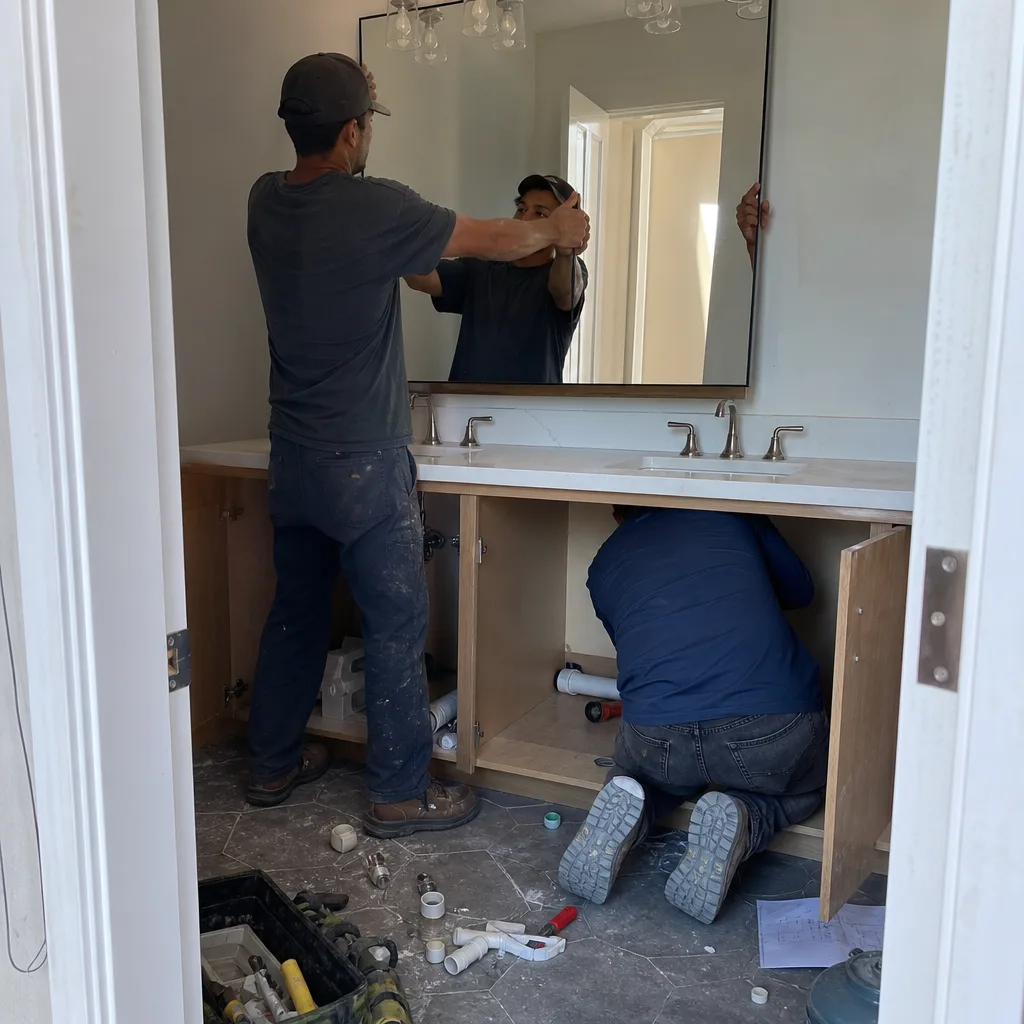
Some maintenance crosses into repair, and some repairs require the original installation documentation that only the contractor possesses. Call a professional when:
- Water damage appears under sinks or inside cabinets, indicating a leak beyond simple sealant failure
- Cabinet doors or drawers shift more than 1/4 inch from baseline, suggesting structural movement or inadequate fastening
- Electrical outlets fail testing or show discoloration, which indicates dangerous wiring faults
- Grout or caulk failure extends beyond isolated joints, suggesting substrate movement or improper initial installation
- You need warranty documentation from the original contractor and cannot locate it
Rowan Construction Group Irvine offers free estimates in Irvine, call (657) 227-2502. We also provide a Free Second Opinion on any written estimate, reviewing competitor quotes line by line at no charge. Our 365-Day Done Right Promise means if it is not done right, we make it right, backed by The Haven Standard, not a handshake. Every project is quoted with a flat written price and written scope before work begins; no change proceeds without a signed change order.
Frequently Asked Questions
Annual maintenance for a typical Irvine kitchen remodel runs $150-$400 in materials and supplies if you perform the work yourself, or $400-$800 if you hire a handyman for the 90-day and annual inspections. This excludes water softener installation, which adds $1,200-$2,800 upfront but reduces annual fixture replacement costs by roughly half. Call (657) 227-2502 for an exact quote on professional maintenance scheduling, estimates are free.
No. Under Clause 1 of The Haven Standard, the price is written before anyone starts. If we find issues during a maintenance inspection, we quote the repair separately with a new written scope and price. No work proceeds on a change until the change order is signed. This discipline is why Rowan’s projects finish within a few percent of the agreed cost across 4,000-plus jobs since 2007.
At Irvine’s 300-400 mg/L TDS, a water softener is strongly recommended for homes with quartz countertops, high-end fixtures, or instant-hot dispensers. Many manufacturer warranties explicitly or implicitly require soft water for full coverage. Without one, expect to replace faucet cartridges every 2-3 years instead of 7-10, and to reseal stone surfaces twice as often. The payback period is typically 3-5 years in avoided replacement and maintenance costs.
Request the permit final-inspection card and verify it against the scope of work in your contract. Electrical, plumbing, and building permits are separate; a “final building” stamp does not mean electrical or plumbing passed. In Irvine, you can also verify permit status online through the City of Irvine’s permit portal using your address. If your contractor cannot produce permits or the online record does not match your project, your warranties may be compromised. Rowan Construction Group pulls permits and passes inspections on every trade we perform, with documentation provided at closeout.
For grout, the earliest sign is a powdery residue when you run a fingernail across the joint, or a color change that does not clean with pH-neutral cleaner. For caulk, look for shrinkage pulling away from one side of the joint, or surface cracking that extends through the bead. Both indicate the material has lost adhesion or elasticity and will admit water. Address within 30 days to prevent substrate damage.
Keep all documentation for the longest warranty period plus one year. For KraftMaid cabinets, that is lifetime plus one year, effectively forever. For Kohler faucets with lifetime warranties, same. For quartz countertops with 10- or 15-year warranties, 11 or 16 years. Store digital copies in cloud storage and physical copies in a fireproof location. The documented photo record that Rowan includes as standard on every visit becomes part of this permanent file.
The Bottom Line
A kitchen remodel in Irvine represents a significant investment in a climate and water chemistry that actively tests every material choice and installation detail. The 30/90/180/365-day inspection schedule, hard-water-specific descaling protocol, and documented maintenance log transform routine care into warranty protection. The homeowners who protect their investment are not the ones who chose the most expensive materials; they are the ones who read the fine print, tested their water, and kept records that manufacturers could not deny. Start your log today, with dated photos of every surface and fixture in its current condition. In 18 months, you will know whether your contractor built to last, and you will have the documentation to hold them, or the manufacturer, accountable if they did not.
Written by Grant Rowan, Owner at Rowan Construction Group Irvine, serving Irvine since 2007.