
Last updated September 24, 2026
Free written scope consultation - allowances, timeline, and change-order rules on paper before a single trade is scheduled




 Before
 After
After Before
 After
After Before
 After
AfterDIY vs Professional Construction: The Irvine Homeowner’s Decision Guide
Most Irvine homeowners assume the DIY-or-hire question comes down to whether they own a good drill and can follow a YouTube tutorial. It doesn’t. In our experience across 4,000-plus projects since 2007, the real calculation involves three forces most homeowners discover too late: California’s insurance code, Irvine’s permit enforcement, and the mechanics of how The Irvine Company and its managed HOAs discover and penalize unpermitted work. Here’s what changes the math. California Insurance Code allows carriers to deny claims “arising from or related to” unpermitted construction. We’ve seen water-damage claims voided on Irvine homes where the leaking fixture was installed without a required plumbing permit, even when the leak itself had nothing to do with installation quality. This guide walks through exactly which projects trigger permits in Irvine, how HOA enforcement actually works, where DIY still makes sense, and how to compare real costs when the “savings” might include a stop-work order and re-inspection fees.
Quick Answer
DIY construction in Irvine makes sense only for tasks with no permit trigger, no HOA architectural review, and no insurance exposure: interior painting, cabinet hardware swaps, and small tile backsplashes under 50 square feet. For everything else - including water heater swaps, electrical panel work, window replacements, and any structural change - the combined risk of permit penalties, HOA remediation orders, and insurance voidance typically erases any labor savings within the first correction cycle. In Irvine’s regulated environment, professional hiring is less about skill and more about risk transfer.
Table of Contents
- The Irvine Permit Threshold: What Requires a Permit Regardless of Who Does the Work
- How Irvine HOAs Discover and Enforce Unpermitted Work
- The Insurance Void Risk: How Your Policy Language Actually Works
- Where DIY Still Makes Sense in Irvine
- Honest Cost Comparison: When “Savings” Become Penalties
- The Documentation Difference: What Professionals Provide That DIY Cannot
- Common Mistakes to Avoid
- When to Call a Professional
 Before
 After
AfterThe Irvine Permit Threshold: What Requires a Permit Regardless of Who Does the Work
Irvine operates under the California Building Standards Code with local amendments administered by the Irvine Community Development Department. The permit threshold is not a suggestion. It is a legal requirement that applies to the property, not the person doing the work. Whether you hire a contractor or do it yourself Saturday morning, the permit obligation is identical.
Here is the practical breakdown for Irvine homeowners:
| Project | Permit Required? | Typical Permit Cost in Irvine | Inspection Sequence |
|---|---|---|---|
| Water heater replacement (same location) | Yes - plumbing and mechanical | $180-$320 | Rough, final |
| Electrical panel upgrade | Yes - electrical | $280-$450 | Rough, final, utility coordination |
| Window replacement (same opening, like-for-like) | No - if dimensions unchanged | N/A | N/A |
| Window replacement (enlargement or new opening) | Yes - building | $350-$600 | Rough, insulation, final |
| Deck build (attached, >120 sq ft or >30″ above grade) | Yes - building | $400-$750 | Foundation, framing, final |
| Bathroom vanity swap (same location, no plumbing relocation) | No | N/A | N/A |
| Tile backsplash <50 sq ft | No | N/A | N/A |
| Fence replacement (same height/location) | No - but HOA review likely | N/A | N/A |
| Fence height increase or relocation | Yes - zoning/planning | $200-$400 | Zoning verification, final |
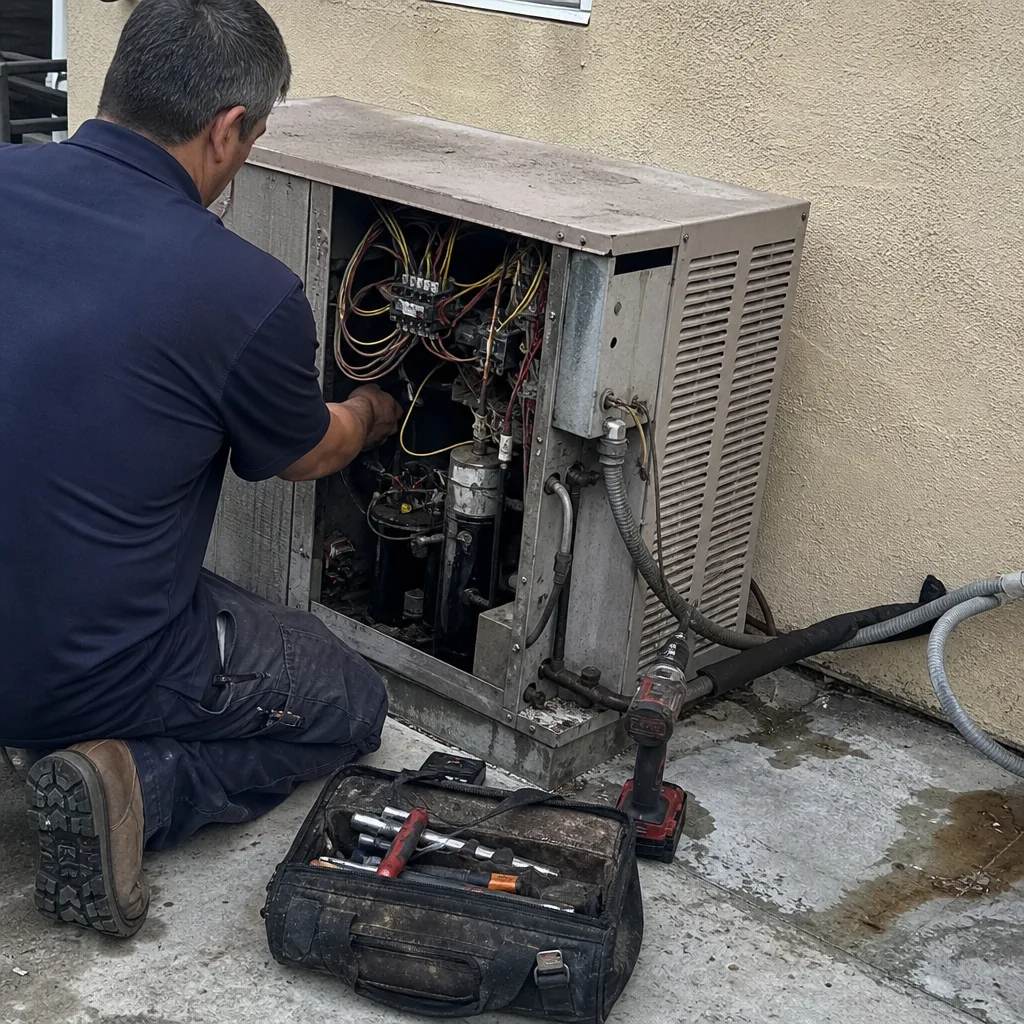
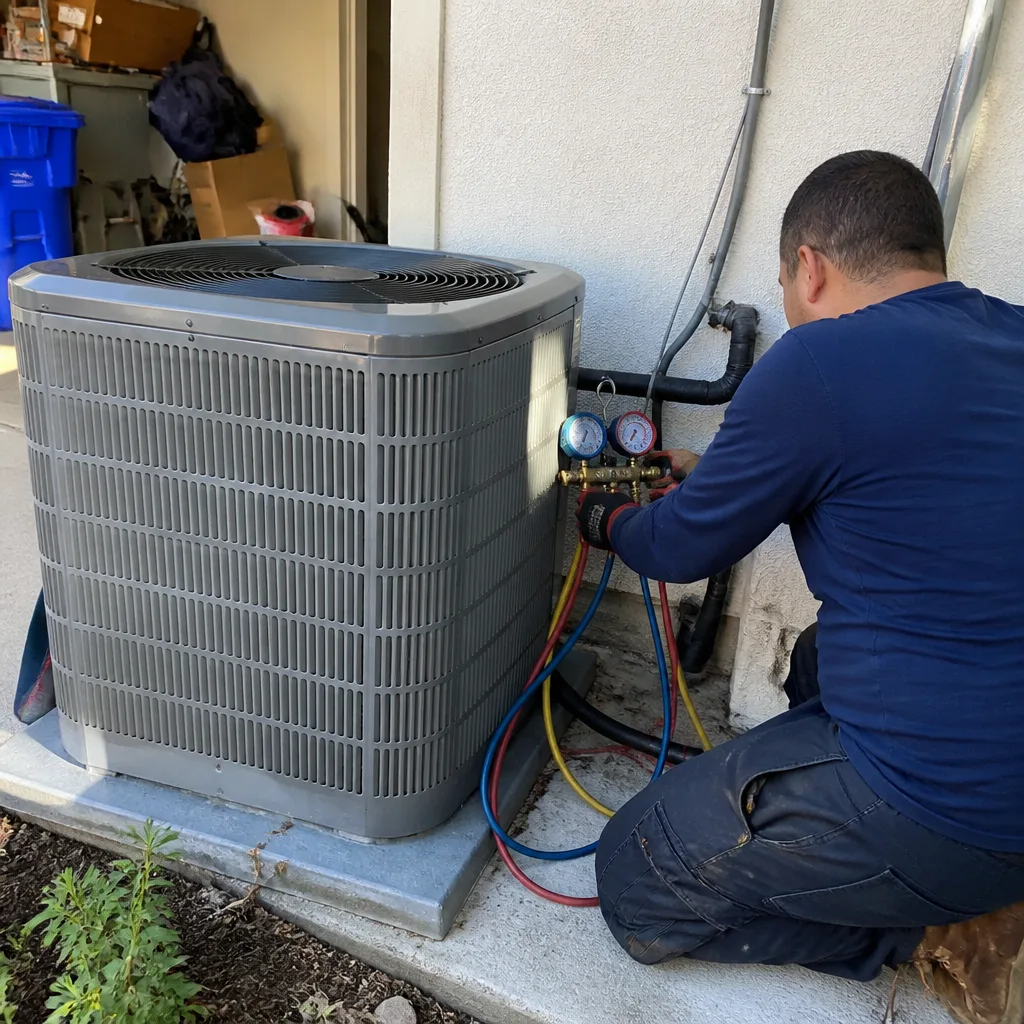
| HVAC replacement | Yes - mechanical | $220-$380 | Rough, final |
The critical detail most homeowners miss: Irvine requires permits for water heater replacements even when the unit is the same capacity in the same location. The reasoning is seismic strapping and venting code compliance, both of which changed significantly in California’s 2019 code cycle. We’ve been called to Irvine homes in Woodbridge and Northwood where a homeowner’s self-installed water heater triggered a compliance complaint during a later sale inspection, forcing a retroactive permit, inspection, and $400 re-inspection fee.
Electrical panel upgrades carry an additional complexity. Southern California Edison requires its own coordination sequence, and Irvine’s electrical inspector will not sign final until utility approval is documented. A homeowner managing this alone faces a multi-week process with three separate entities: the city, the utility, and often the HOA architectural committee for any exterior work visibility.
Under Clause 1 of The Haven Standard, Rowan Construction Group delivers the written permit cost as a line item in every quote. The price you see includes the application, the scheduling, and the inspection coordination. No surprise fees appear after work starts.
How Irvine HOAs Discover and Enforce Unpermitted Work
Irvine’s master-planned structure means most residential neighborhoods operate under HOA governance, with The Irvine Company and its management affiliates overseeing architectural compliance in communities from Turtle Rock to Portola Springs. The enforcement mechanism is more systematic than most homeowners realize.
Here’s how discovery typically happens:
- Visible exterior changes trigger neighbor complaints or management drive-by inspections. Irvine Company communities employ roving property inspectors who photograph exteriors quarterly. A new window profile, a deck rail style that doesn’t match the community standard, or a fence height change gets flagged automatically.
- Sale or refinance triggers document review. When an Irvine home sells, the HOA demands a compliance certificate. Unpermitted work discovered at this stage must be remediated before transfer, or the seller must escrow funds for correction. We’ve seen $15,000 held in escrow for an unpermitted patio cover in Quail Hill.
- Utility work or insurance claims expose interior changes. A water heater leak that damages a common wall, or an electrical issue that requires SCE involvement, brings inspector attention to work that was never permitted.
- City code enforcement responds to complaints. Irvine’s code enforcement division operates on a complaint-driven basis, and complaints are anonymous. A stop-work order can be issued retroactively, requiring demolition of finished work to expose framing or plumbing for inspection.
The remediation order structure follows a predictable pattern. First, the HOA issues a notice of violation with a 30-day cure period. If the work is unpermitted, the cure requires either permitting the work (often impossible if it doesn’t meet current code) or removing it. In the case of a deck or structural addition, removal means demolition. Then the city may layer its own penalties: a $500 administrative citation for unpermitted construction, plus the cost of all required inspections at double the standard fee schedule.
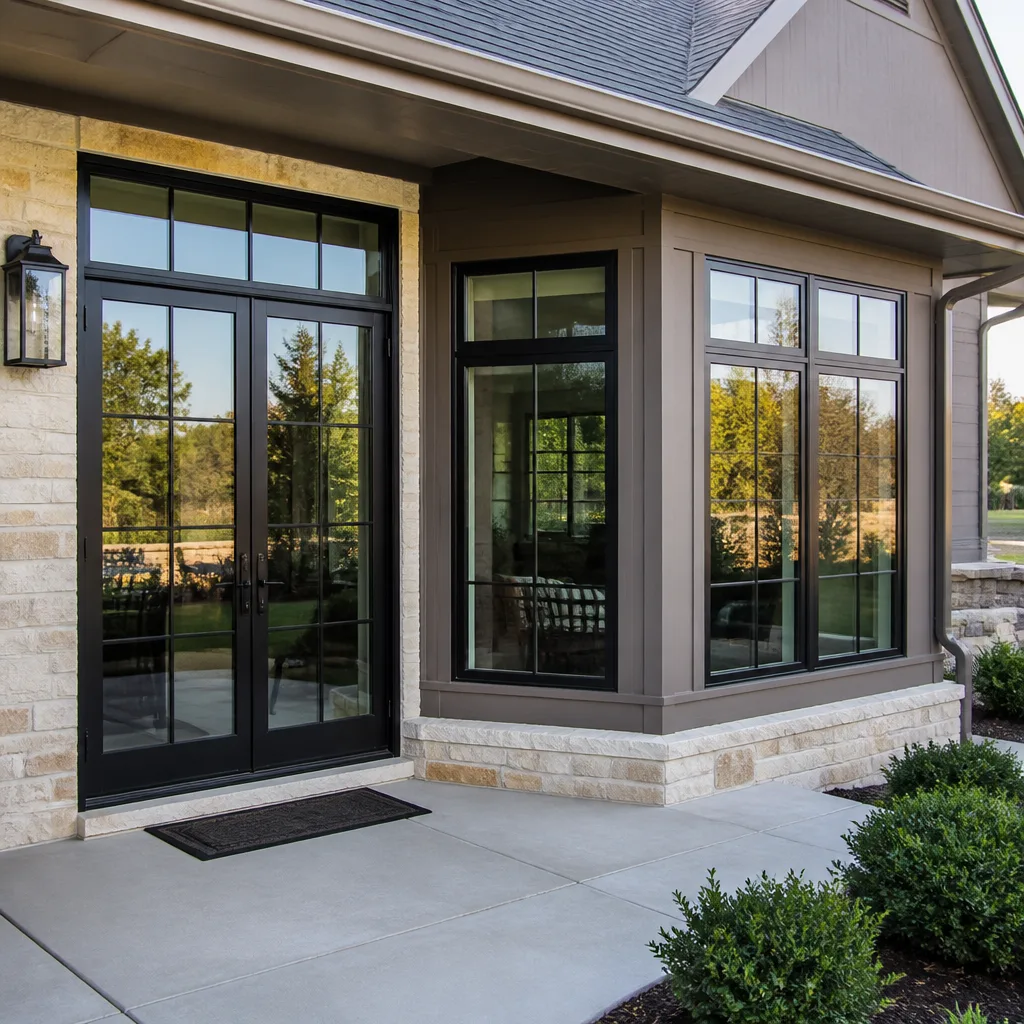
In Woodbridge specifically, we’ve observed stricter enforcement of window replacement standards. Even like-for-like replacements require HOA architectural pre-approval in some villages, and failure to obtain it results in a requirement to restore the original appearance at the homeowner’s expense.
The professional advantage is documentation. When Rowan Construction Group Irvine home completes a project, the homeowner receives the permit record, the inspection sign-offs, and the HOA architectural approval letter as standard deliverables. These documents transfer with the property. DIY work rarely produces this paper trail, and the absence becomes expensive when the home changes hands.
The Insurance Void Risk: How Your Policy Language Actually Works
Homeowner’s insurance policies in California contain exclusion language that most policyholders never read until they need to file a claim. The relevant clause typically reads: “We do not cover loss arising from or related to construction, alteration, or repair performed without required permits or in violation of building codes.”
The phrase “arising from or related to” is broader than it appears. It does not require the unpermitted work to have caused the loss directly. It requires only that the loss be connected to the unpermitted work in a way the insurer can argue.
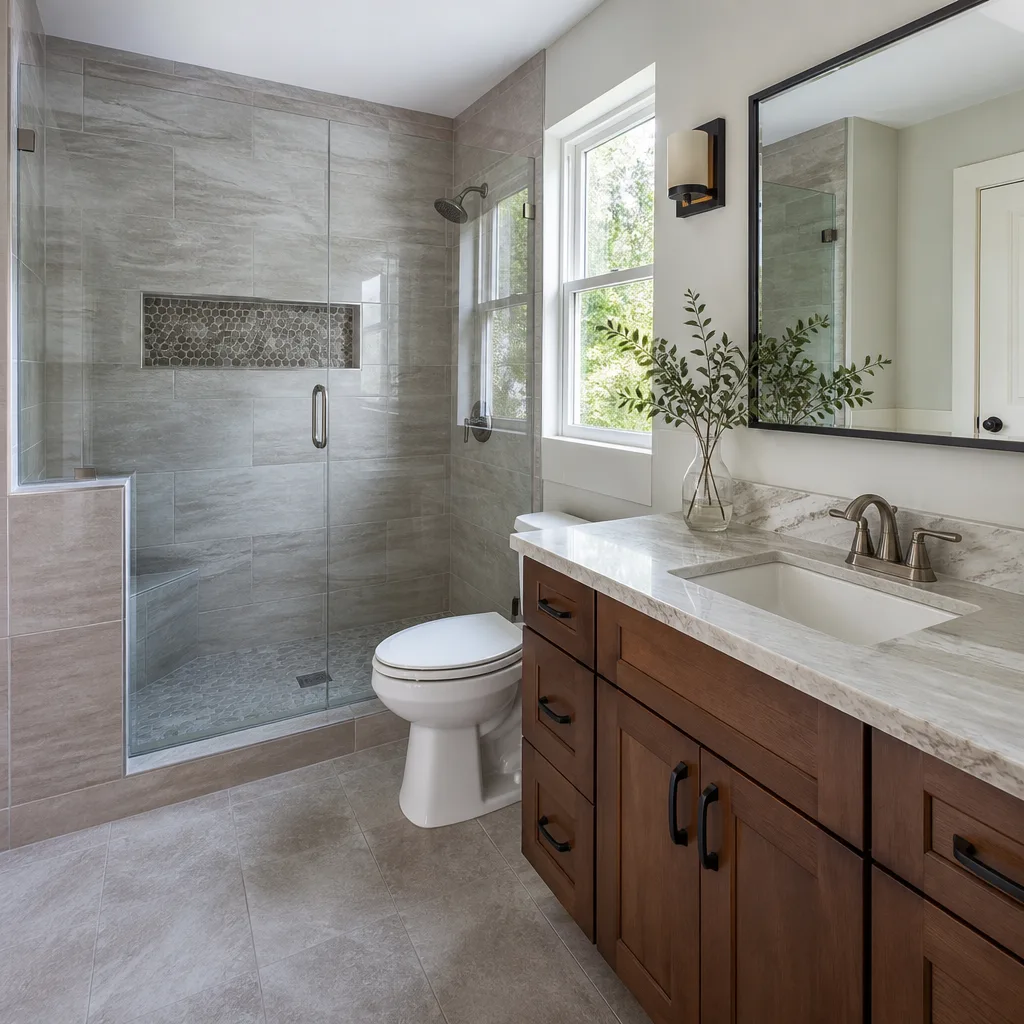
Consider this scenario we’ve encountered in Irvine. A homeowner replaces a bathroom vanity and, in the process, relocates the supply lines without a plumbing permit. Two years later, a supply line fitting fails, causing water damage to the ceiling below. The insurer denies the claim, arguing that the loss “arose from” plumbing work performed without the required permit. The homeowner’s recourse is litigation or self-funding repairs that often exceed $20,000 in Irvine’s construction cost environment.
Another case: an unpermitted electrical panel upgrade in Northwood. A circuit overloads, causing a small fire in the garage. The insurer denies the fire damage claim, citing the unpermitted panel work as the “related” condition. The homeowner faces $45,000 in repairs plus temporary housing costs.
To check your own exposure, locate these specific provisions in your policy:
- The “Exclusions” section, subsection on “Faulty, Inadequate, or Defective Construction”
- The “Conditions” section addressing “Concealment or Fraud,” which insurers interpret to include permit misrepresentation
- Any endorsement titled “Ordinance or Law,” which governs whether the policy covers code-upgrade costs during repair
Some carriers offer permit compliance riders for an additional premium, but these require documentation of permitted work at the time of policy issuance or renewal. They do not retroactively protect unpermitted improvements.
The professional contractor’s value here is risk transfer, not just labor. When Rowan Construction Group performs permitted work with inspection sign-offs, the documentation creates a defensible record if an insurer later attempts denial. Under The Haven Standard, every project includes this documentation as standard, not as an optional add-on.
Where DIY Still Makes Sense in Irvine
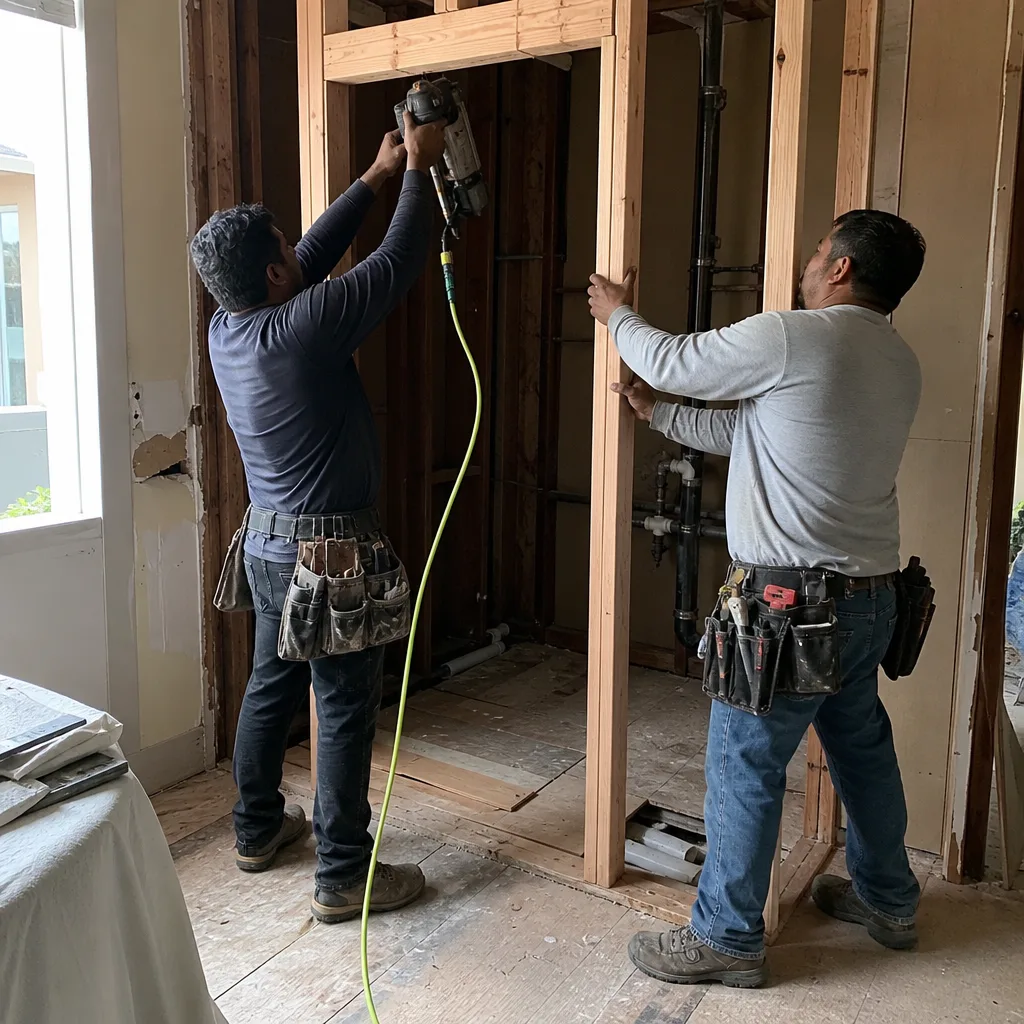
Despite the regulatory weight, certain home improvement tasks in Irvine carry no permit trigger, no HOA architectural review requirement, and no meaningful insurance exposure. These are the projects where DIY savings are real and the risk is limited to the quality of the work itself.
Interior painting: No permit, no inspection, no HOA notification required for interior color changes. The risk is aesthetic, not legal. Use zero-VOC paint in Irvine’s climate, where off-gassing lingers longer in sealed homes during summer cooling months.
Cabinet hardware replacement: Knobs, pulls, and hinges on existing cabinet boxes require no permit and no review. The only caution: older Irvine homes in University Park and Rancho San Joaquin may have European-style hinge systems that are not interchangeable with standard hardware. Verify the mounting pattern before purchase.
Tile backsplash under 50 square feet: Below this threshold, no permit is required in Irvine. The work is cosmetic, non-structural, and does not affect plumbing or electrical systems. Use a polymer-modified thinset suitable for Irvine’s dry climate, where standard mastic can fail behind gas cooktops.
Simple landscaping (non-structural): Planting, mulch, and irrigation timer replacement fall outside permit requirements. Avoid retaining walls over 30 inches, which trigger building permits, and check HOA landscape guidelines in villages like Shady Canyon where native plant requirements apply.
Light fixture replacement on existing boxes: Swapping a pendant for a pendant on an existing junction box is generally permit-exempt. Extending wiring, adding switches, or installing ceiling fans on non-rated boxes requires electrical permits.
The common thread: these tasks do not alter structural, plumbing, electrical, or mechanical systems. They do not change the home’s exterior appearance. They do not require utility coordination. And they can be undone without demolition if the result is unsatisfactory.
Even here, documentation matters. Photograph the “before” condition, especially around plumbing and electrical penetrations. If a future leak or issue arises, these photos establish that your work did not disturb the underlying system.
Honest Cost Comparison: When “Savings” Become Penalties
The standard DIY cost comparison found online compares material costs plus “free” labor against a contractor’s flat price. This is incomplete for Irvine. Here’s the actual math on a common project: bathroom vanity replacement with plumbing relocation.
DIY Scenario:
| Item | Cost |
|---|---|
| Vanity (Home Depot, 36″ KraftMaid base) | $680 |
| Faucet (Kohler, mid-grade) | $240 |
| Supply lines, P-trap, fittings | $85 |
| Tools (pipe cutter, basin wrench if not owned) | $120 |
| Permit (if homeowner realizes requirement) | $180 |
| Time: 8-12 hours (skilled DIYer); 20+ hours (learning curve) | - |
| Subtotal, best case | $1,305 |
Professional Scenario (Rowan Construction Group, typical Irvine quote):
| Item | Cost |
|---|---|
| Flat price, vanity swap with plumbing relocation | $2,400-$3,200 |
| Permit and inspection coordination | Included |
| Workmanship warranty (365-Day Done Right Promise) | Included |
| Documented photo record | Included |
| Time: 1 day, homeowner not present | - |
Now add the correction scenarios we’ve seen in Irvine:
- Missed permit, discovered at sale: Retroactive permit application ($180), re-inspection fee ($400), possible drywall removal to expose plumbing for inspector ($800-$1,200). Total added: $1,380-$1,780.
- Leak from self-installed supply line, insurance denial: Water damage repair $8,000-$25,000, entirely self-funded.
- HOA violation for exterior venting change (some vanity configurations affect exterior venting): Remediation order, restore original condition $600-$1,500.
The honest comparison is not $1,305 versus $2,800. It is $1,305 with a 15-20% probability of $2,000-$25,000 in downstream costs, versus $2,800 with documented compliance and warranty protection. Under Clause 1 of The Haven Standard, the written price includes all of this. There is no scenario where the homeowner writes a second check for “corrections.”
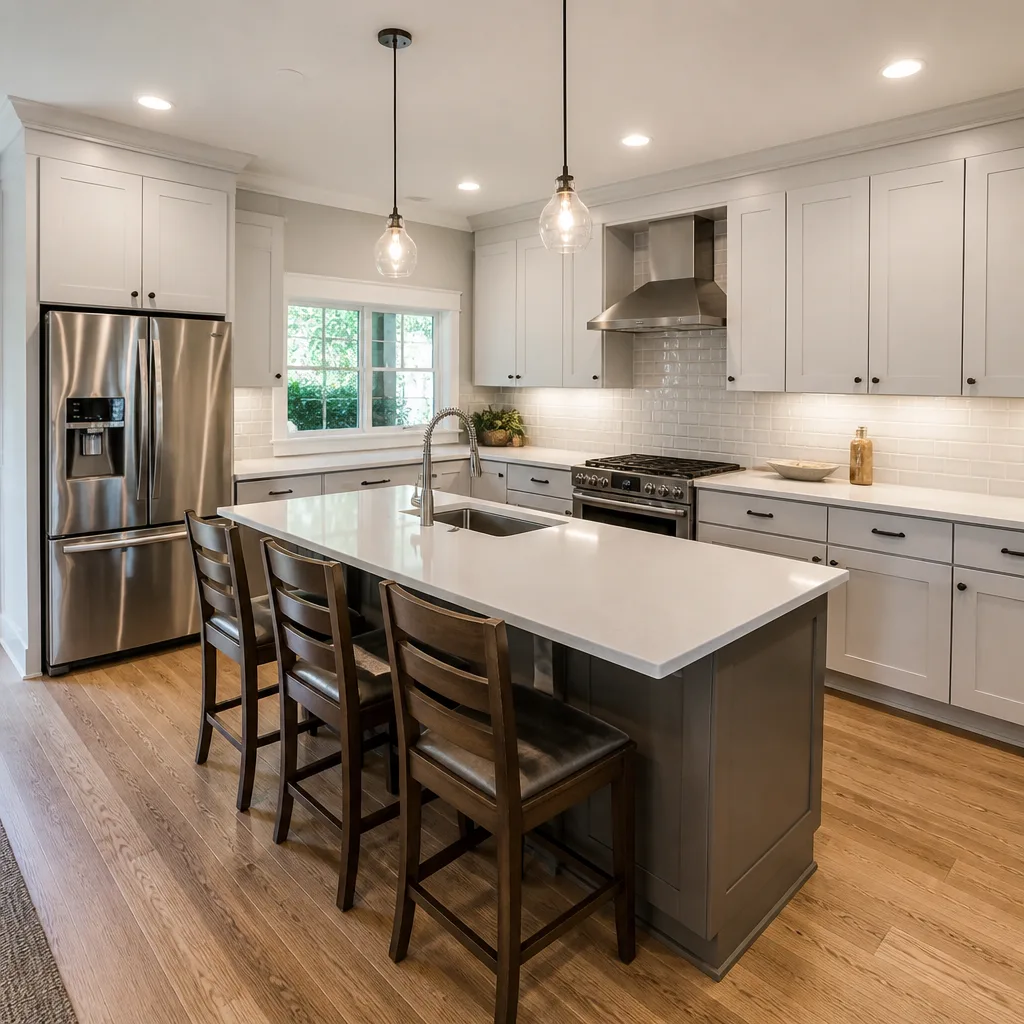
For Kitchen Remodeling in Irvine and Bathroom Remodeling in Irvine, the permit and inspection sequence is complex enough that professional coordination typically pays for itself in avoided delay alone. A kitchen remodel in Irvine requires mechanical, electrical, and plumbing permits with sequenced inspections. A homeowner self-managing this faces 4-6 weeks of scheduling complexity that a professional contractor handles as part of the project timeline.
The Documentation Difference: What Professionals Provide That DIY Cannot
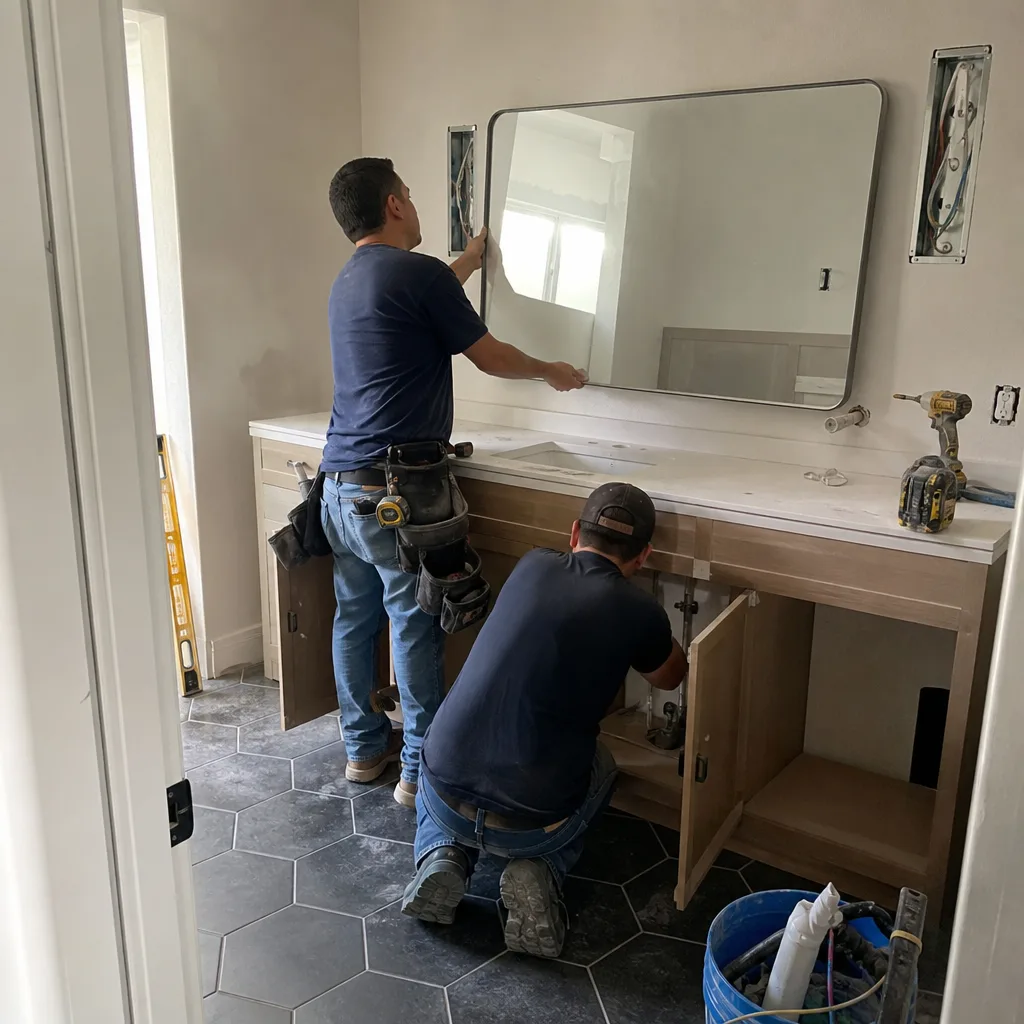
The gap between DIY and professional construction is not primarily skill, though skill matters. It is documentation. The paper trail created by a permitted, inspected, and warranted project has tangible value that DIY work cannot replicate.
Here is what Rowan Construction Group delivers on every project, included as standard:
- Written flat price with scope of work. Every line item is specified: material brand (e.g., Atlas shingles, Tamko underlayment, Boral siding, PGT windows where specified), quantity, labor hours, permit fees, and waste disposal. The total is fixed before work starts. Under The Haven Standard, no change proceeds without a signed change order, which is why our projects finish within a few percent of the agreed price.
- Permit application and inspection coordination. We file the application, schedule the inspections, and meet the inspector. The homeowner receives copies of all sign-offs. In Irvine, where inspection scheduling can run 5-7 business days, our existing relationships with the Community Development Department prevent the delays that extend DIY timelines by weeks.
- Documented photo record on every visit. Before, during, and after photos, geo-tagged and dated, delivered to the homeowner. This is not an upgrade. It is standard documentation that protects both parties and establishes the condition of concealed work (framing, plumbing rough-in, electrical routing) that will be hidden behind drywall.
- HOA architectural approval packet. For exterior work, we prepare the materials list, renderings, and specification sheets that Irvine Company-managed HOAs require. We’ve navigated the Shady Canyon design review, the Woodbridge village covenants, and the Turtle Ridge architectural guidelines. Each has distinct requirements for color, material, and setback.
- 365-Day Done Right Promise. If it is not done right, we make it right. The guarantee is printed on every page and backed by a terms page, not an asterisk. This is transferrable to subsequent owners, adding value at sale.
- Background-checked, uniformed technicians. Every crew member is verified before arriving at your Irvine home. A live person answers calls 24/7. The license number is on every document.
DIY work produces none of this. The homeowner has receipts for materials, perhaps some photos on their phone, and their own memory of what was done and how. When the home sells, this record is insufficient for buyer confidence or insurer protection. When a problem arises, there is no warranty to invoke and no professional to call.
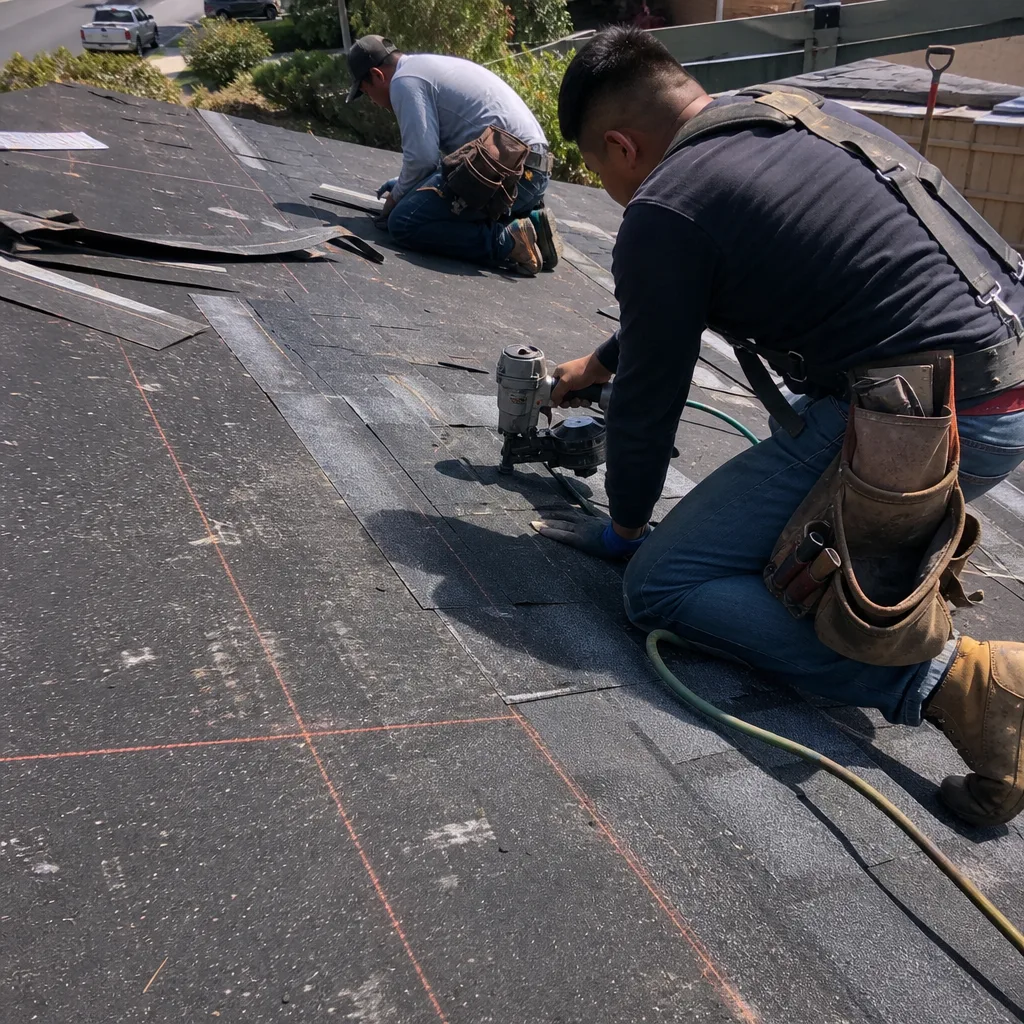
For Roofing in Irvine, the documentation gap is especially consequential. A roof replacement requires manufacturer warranty registration (GAF, Owens Corning, Atlas, or Tamko systems), city inspection, and often HOA color approval. Miss any step, and the 30-year material warranty is void, the permit is incomplete, and the sale inspection fails. We’ve re-permitted three Irvine roofs where the original contractor - not even a DIY job - skipped manufacturer registration, leaving the homeowner with no warranty recourse when shingles failed prematurely.
Common Mistakes to Avoid
- Assuming “like-for-like” replacements never need permits. In Irvine, water heaters, HVAC units, and electrical panels require permits even when the replacement matches the original specifications. The permit is about code compliance at the time of installation, not about whether the unit changed.
- Believing HOA approval substitutes for city permits. These are separate systems. HOA architectural approval governs appearance. City permits govern safety and code compliance. A project can have full HOA approval and still be unpermitted, exposing the homeowner to insurance voidance and code enforcement.
- Ignoring the “related to” language in insurance policies. The exclusion does not require the unpermitted work to have caused the damage. It requires only a connection that the insurer’s legal team can argue. Document everything, or hire someone who does.
- Using online permit calculators from other California cities. Irvine’s fee schedule and amendment package differ from Santa Ana, Costa Mesa, and Newport Beach. A permit that costs $180 in Irvine might be $95 or $340 elsewhere. Use Irvine’s published fee schedule or ask a local contractor.
- Starting work before HOA approval in exterior projects. Irvine Company communities issue stop-work orders that carry fines of $100-$200 per day. The approval process takes 14-21 days. Starting early is false economy.
- Failing to document “before” conditions. In a dispute about whether work caused damage, the absence of photos from before the project started weakens the homeowner’s position significantly. Professional contractors photograph everything; DIYers should too.
- Assuming a handyman’s license covers construction work. California’s C-61 Limited Specialty and B-General Building classifications have distinct scopes. A handyman performing work outside their classification cannot pull the correct permit, and the permit they do pull may not protect the homeowner.
When to Call a Professional
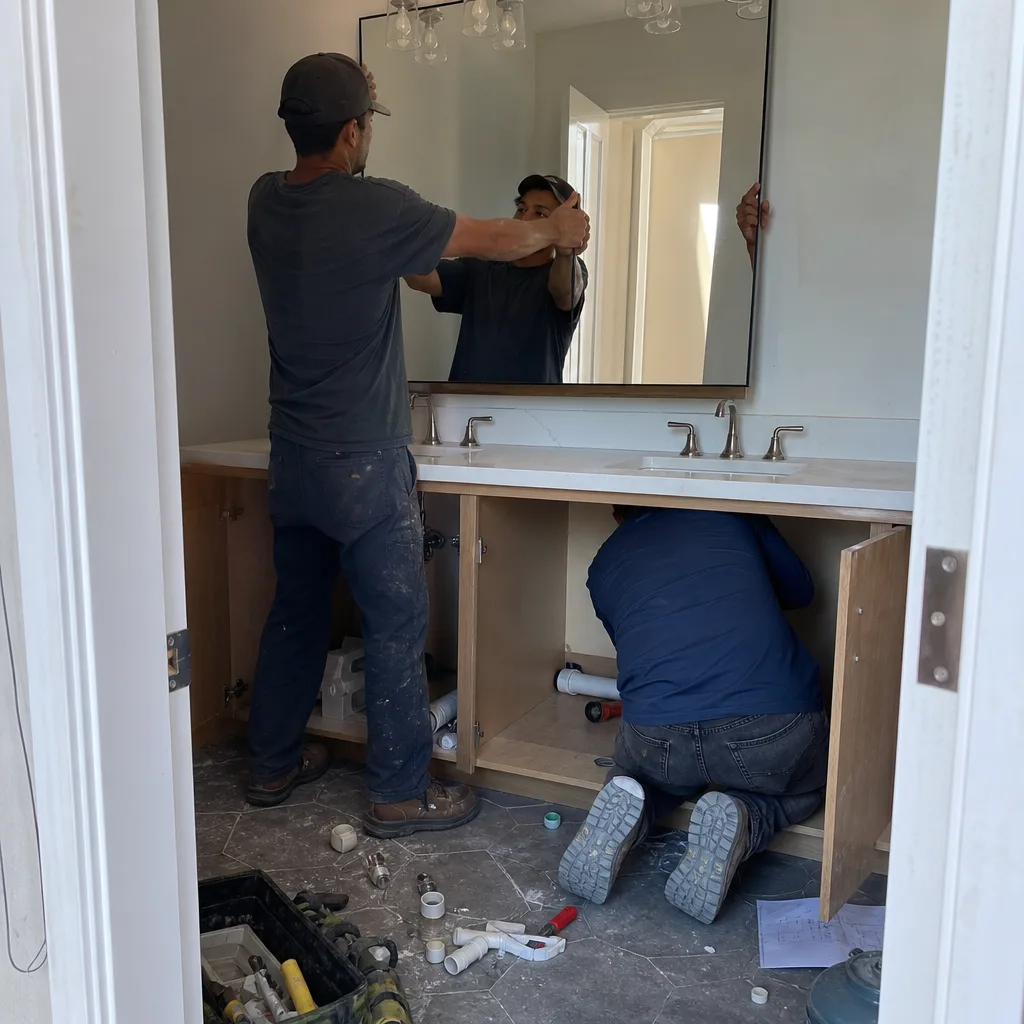
Call a professional when the project touches structural, plumbing, electrical, or mechanical systems; when it changes the home’s exterior appearance; when it requires utility coordination; or when the cost of correction exceeds the cost of professional execution. In Irvine’s regulatory environment, this threshold arrives earlier than in less-governed markets.
Specifically: water heater swaps, panel upgrades, window enlargements, deck builds, kitchen remodels, bathroom remodels, roof replacements, and any home addition or ADU work. These projects require permits, inspections, and documentation that DIY execution rarely achieves completely.
Rowan Construction Group Irvine offers free estimates in Irvine. We’ll review your project, identify the permit and HOA requirements, and deliver a written flat price before any work starts. Call (657) 227-2502 to schedule. We also provide a Free Second Opinion on any written estimate - bring a competitor’s quote and we’ll review it line by line at no charge.
Frequently Asked Questions
Yes. Irvine requires a plumbing and mechanical permit for all water heater replacements, even when the new unit is the same capacity in the same location. The permit ensures compliance with current seismic strapping and venting codes. Call (657) 227-2502 for an exact quote - estimates are free.
Yes. Irvine Company-managed HOAs can issue a notice of violation with a 30-day cure period. If the work is unpermitted and cannot be retroactively permitted (common when code has changed), removal is typically required. We’ve seen remediation orders in Woodbridge, Turtle Rock, and Quail Hill ranging from $2,000 for fence restoration to $25,000 for deck demolition.
Not if the work was unpermitted. California policies contain exclusions for losses “arising from or related to” unpermitted construction. This language has voided claims where the unpermitted work was not the direct cause of the damage. Check your policy’s “Exclusions” section for the specific wording.
A straightforward vanity replacement with no plumbing relocation typically runs $1,800-$2,600 including permit if required. With plumbing relocation, $2,400-$3,200. The written quote includes all labor, materials, permit fees, and the 365-Day Done Right Promise. Call (657) 227-2502 for a line-item quote.
The city can issue a stop-work order, an administrative citation ($500), and require demolition of finished work to expose systems for inspection. The HOA can layer its own penalties. Retroactive permitting is sometimes possible but often requires code upgrades that increase cost significantly. The total exposure frequently exceeds the original professional quote.
Yes, for tasks with no permit trigger, no HOA review, and no insurance exposure: interior painting, cabinet hardware, small tile backsplashes under 50 square feet, and simple landscaping. These projects save labor costs without creating downstream risk. The moment a project involves permits, utilities, or structural systems, the risk-adjusted math shifts toward professional hiring.
The Bottom Line
The DIY-or-hire decision in Irvine is not a test of your tool collection or YouTube fluency. It is a risk calculation involving three forces: the city’s permit requirements, your HOA’s enforcement mechanisms, and your insurance policy’s exclusion language. Most homeowners discover these forces only after a problem arises - a denied claim, a stop-work order, a failed sale inspection.
The tasks where DIY genuinely saves money are narrow and well-defined: interior painting, hardware swaps, small backsplashes. Everything else carries permit obligations that apply regardless of who does the work, and penalties that erase labor savings within the first correction cycle. In a market as regulated as Irvine, professional hiring transfers not just labor but legal and financial risk.
Rowan Construction Group has operated under The Haven Standard since 2007, delivering 4,000-plus projects with a written price before any work starts and a documented record when the crew left. Our 365-Day Done Right Promise, Free Second Opinion on any written estimate, and standard documented photo record on every visit are designed for homeowners who research contractors the way they research appliances - with specific numbers, verifiable claims, and zero tolerance for surprises.
Call (657) 227-2502 to schedule your free estimate. We’ll deliver the written price, identify every permit and HOA requirement, and show you exactly what documentation you’ll receive before the first tool is unpacked.
Written by Grant Rowan, Owner at Rowan Construction Group Irvine, serving Irvine since 2007.